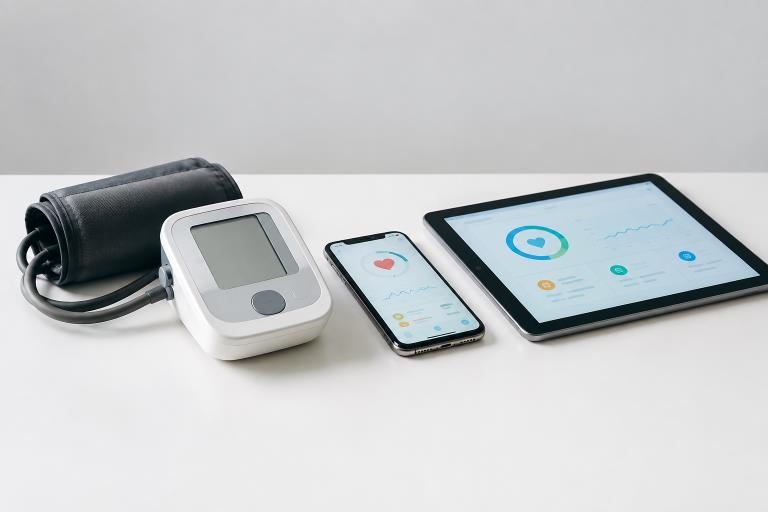
Remote patient monitoring helps care teams follow selected health information while patients are at home. A well-designed program combines connected devices, patient education, clinical review, and clear follow-up, rather than treating technology as a replacement for care. For organizations evaluating platforms, remote patient monitoring software from CoachCare illustrates how connected devices, patient engagement, clinical monitoring, and workflow support can be brought together for chronic-condition care. CoachCare supports remote care programs for diabetes, heart failure, COPD, and primary care workflows, with services spanning enrollment, device logistics, education, monitoring, and escalation support. Home-based data can reveal patterns that a single office measurement may miss. For example, repeated blood pressure readings can help a clinician. Monitoring can also reduce some practical barriers to ongoing care, particularly for people with mobility limitations, transportation challenges, or long travel distances. It does not replace emergency care, necessary examinations, or in-person appointments when those are clinically appropriate. Some practices work with remote care management services to extend enrollment, patient outreach, and clinical coordination beyond the traditional visit. Regardless of whether a program is staffed internally or through outside support, the care team should define who owns each patient-facing and clinical task.
What Remote Patient Monitoring Means
Remote patient monitoring, often called RPM, is a care model in which patients use digital devices to collect physiological data outside the clinic and send it to a healthcare team. Depending on the care plan, that information may include blood pressure, weight, blood glucose, heart rate, or oxygen saturation. The Medicare guidance for remote patient monitoring describes RPM services as involving connected devices, data transmission, patient setup and education, and treatment management by clinical staff. The important distinction is clinical use. A reading has limited value if no one is assigned to review it, assess its context, and respond in accordance with an appropriate protocol.
How a Remote Monitoring Program Works
- Identify appropriate patients: Review the diagnosis, risks, care goals, and ability to participate.
- Explain expectations: Tell patients what will be measured, how often readings are needed, and who may contact them.
- Set up the device: Provide equipment and simple instructions for correct use.
- Receive and review data: Monitor readings, symptoms, trends, alerts, and missed transmissions.
- Respond and document: Contact the patient when needed, escalate concerns, and record actions in the clinical record.
- Evaluate progress: Review participation, outcomes, workload, and whether the program remains appropriate.
Keeping Patients Engaged
Participation is often the difference between a promising RPM program and an unused device in a drawer. Instructions should use plain language, large, readable text, and a limited number of steps. Training may happen by phone, video, or in person, depending on the patient’s needs. Consider an older adult with hypertension who struggles to pair a device with a smartphone. A cellular-connected blood pressure cuff, paired with a follow-up call from a nurse, may remove the technical barrier and help the patient build a reliable daily routine. Reminders should be useful, not excessive, and staff should ask about vision, hearing, language, internet access, and digital skills barriers.
Building a Reliable Clinical Workflow
Every incoming reading needs an owner and a next step. Before enrolling patients, teams should answer practical questions:
- Who enrolls patients and teaches device use?
- Who reviews readings and missed measurements?
- Which thresholds trigger outreach, and which require clinician escalation?
- How will staff document calls, messages, decisions, and care-plan changes?
- Who provides backup coverage during absences?
Written escalation rules help staff distinguish an actionable concern from a device error, an expected variation, or a situation requiring emergency instructions. Alerts should support clinical judgment, not create automatic assumptions about a patient’s condition.
Choosing Devices and Digital Tools
The best technology is not necessarily the most complex. It should collect the information the team needs, be practical for the patient, and fit the existing care process. Evaluate whether patients can use the device without difficult pairing steps, whether it works without home broadband, and whether staff can view trends instead of isolated readings. Interoperability also matters. When appropriate data can be safely entered into the electronic health record, staff may avoid duplicate entry and maintain a clearer record of the patient’s remote and in-person care. Platforms should also support messaging, task management, documentation, reporting, and enrollment growth.
Privacy, Security, and Data Quality
Responsible monitoring protects patient information throughout device setup, transmission, review, communication, and documentation. Access should be limited to job responsibilities, and staff should receive training in secure account use, messaging practices, and patient identity verification. Data quality deserves equal attention. Patients need guidance on device placement, timing, repeat measurements, and what to do when a reading appears unusual. Teams should have a process for handling missing, delayed, duplicate, or implausible readings before making a clinical decision.
Measuring Program Results
Enrollment alone does not show whether an RPM program is working. Organizations can track activation rates, measurement adherence, time from alert to review, time from review to patient contact, target clinical measures, patient feedback, staff workload, and operating costs. Results will vary by condition, patient population, staffing model, and program design. A balanced evaluation asks whether monitoring improves the team’s ability to support patients between visits, while recognizing that it cannot prevent every emergency department visit or hospital admission.
Common Questions About Remote Monitoring
Does RPM replace office visits?
No. RPM adds relevant information between visits and may help the team determine when an in-person evaluation is needed.
Which conditions can it support?
Programs commonly support hypertension, diabetes, heart failure, COPD, and post-discharge follow-up. Suitability depends on the patient’s care plan, clinical needs, and ability to use the selected device.
Do patients need a smartphone?
Not always. Some programs use cellular-connected devices or other options that do not require a smartphone or home Wi-Fi connection.
What happens when a patient misses a reading?
A planned outreach process can help determine whether the cause is a technical issue, a disrupted routine, uncertainty about device use, or a possible health concern.
Final Thoughts
Remote patient monitoring is a care model, not simply a technology purchase. The most useful programs pair accessible devices with reliable data, trained staff, clear escalation pathways, thoughtful documentation, and regular patient communication. Patients also need clear instructions on how to use the equipment, record readings, recognize potential problems, and contact their care team when questions or concerning changes arise. On the provider side, staff need defined responsibilities for reviewing incoming information, identifying meaningful changes, documenting follow-up, and determining when additional clinical assessment may be appropriate. The technology should also fit the patient’s daily routine and ability to use the device consistently, particularly when monitoring is intended for long-term chronic-care management. Privacy, data security, connectivity, device maintenance, and technical support should also be considered during program planning. When these pieces work together, home-based monitoring can help care teams gather useful information, communicate more consistently, and deliver more informed support between traditional clinic visits.