Body stressing injuries, the kind caused by lifting, pushing, and pulling heavy loads, made up 34.5 percent of all serious workers compensation claims across Australia in 2023-24, according to Safe Work Australia. That is over 50,000 claims in a single year from this cause alone. Transport, postal, and warehousing sits among the industries with the highest injury and fatality rates in the country. Choosing reliable pallet jack solutions is one of the simplest ways a busy workplace can cut that risk, since a good jack removes most of the raw lifting from moving palletised goods around a warehouse floor.
Manual Versus Electric, What Actually Matters
A manual pallet jack works fine for light, occasional loads over short flat distances. Once loads get heavier or staff are moving pallets all day, an electric jack reduces fatigue and cuts the risk of repetitive strain injuries building up over weeks and months. The right choice depends on load weight, floor conditions, and how often the equipment gets used across a work day.
Load Capacity Is Not Just a Number on a Sticker
Every pallet jack carries a rated load capacity, and exceeding it is one of the fastest ways to cause a tip over or equipment failure. Busy workplaces should match jack capacity to their heaviest regular load, not just their average load, since a single overloaded pallet can cause serious harm.
Features Worth Checking Before You Buy
- Fork length matched to the pallets actually used on site.
- Wheel material suited to the floor, since concrete and epoxy floors need different wheels.
- A visible load capacity rating clearly stamped on the frame.
- Battery life and charging time, if choosing an electric model.
Maintenance Keeps Equipment Safe, Not Just Working
A pallet jack that looks fine can still hide worn wheels, a slow leaking hydraulic system, or a split fork. Routine checks before each work day catch these issues before they cause an incident. Safe Work Australia data shows materials handling equipment remains among the top causes of warehouse injuries, and around 30 percent of related incidents in one 2020 report involved lifting or moving equipment specifically.
Training Matters as Much as the Equipment
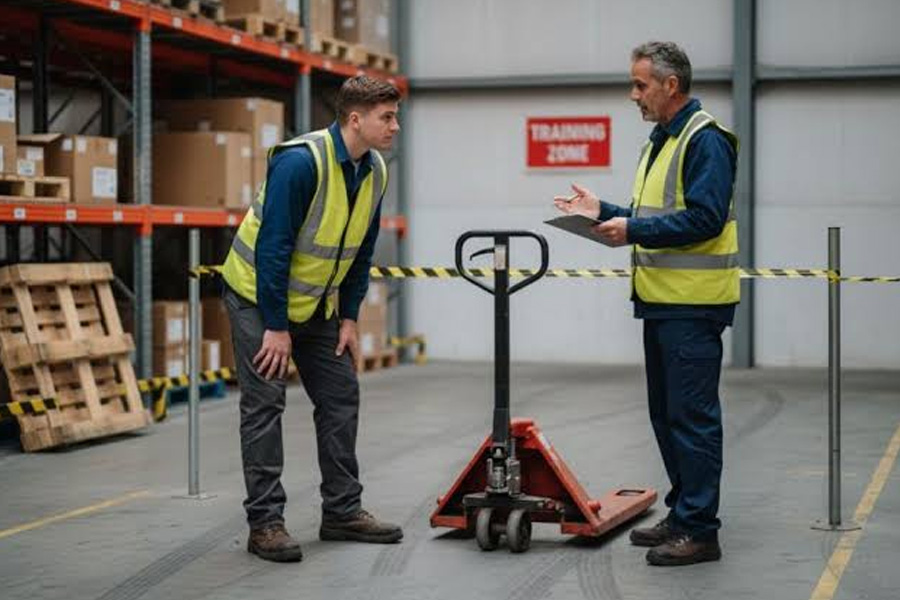
Even the best jack on the market will not prevent injuries if staff have never been trained properly. Operators should know how to check a load is balanced, how to handle ramps safely, and how to avoid placing feet under the jack while lowering a load. A five minute training gap can turn a routine task into a serious incident.
Pinch Points and Foot Injuries Are Common but Preventable
Crushed feet and pinch point injuries are two of the most reported pallet jack incidents, usually happening when a load tips unexpectedly or someone stands too close during lowering. Steel toe boots are not optional in a busy warehouse. Clear floor markings and dedicated pathways for pallet jack traffic also cut down on collisions with pedestrians moving through the same space.
Matching Equipment to Aisle Width and Layout
A pallet jack that is perfect on paper can still be the wrong choice if it cannot turn comfortably in your aisles. Measuring actual aisle width, doorway clearance, and ramp gradients before buying saves a costly return later. Tight layouts often suit shorter, more manoeuvrable jacks, while wide open floors can handle longer fork lengths without issue.
Why Getting This Right Protects the Whole Team
A workplace with 146,700 serious workers compensation claims recorded nationally in 2023-24 cannot afford to treat equipment choice as an afterthought. Picking the right pallet jack, matching it to real workloads, and training staff properly are simple steps that pay off in fewer injuries, less downtime, and a genuinely safer floor for everyone working on it every single day.