A room can start feeling dated even when nothing in it is particularly old. The flooring is still in good shape, the sofa has years left, and the artwork hasn’t suddenly gone out of style. Yet somehow, all those perfectly good pieces no longer seem to belong together quite the way they once did.
Sometimes the missing piece isn’t another new purchase. Walls occupy an enormous amount of visual space, which means changing their color can alter how practically everything around them appears. Wood can look warmer, fabrics can feel richer, and familiar furniture can suddenly seem much more intentional.
That’s why Painting Services Dillion Co can change the character of a room without replacing most of what is already inside it. The walls may be the only thing getting painted, but visually, they rarely change alone.
Every Color Changes the Colors Around It
Paint isn’t viewed in isolation once it reaches a wall. It sits beside floors, trim, cabinets, furniture, rugs, countertops, and artwork. Each neighboring material influences how the wall color appears, and the wall color returns the favor.
Undertones are a big reason this happens. A neutral that appears straightforward on a sample may reveal warmer, cooler, greener, or pinker qualities once it’s surrounded by other materials. A shade that looked perfect in one house can behave completely differently beside another home’s flooring and furnishings.
Contrast matters too. Dark furniture can become more prominent against a pale wall, while certain wood tones may feel warmer or cooler depending on their surroundings. Nothing about the furniture itself has changed. The visual relationship has. That’s what makes paint such a powerful decorating tool. Instead of replacing every element individually, it can change the backdrop that connects all of them.
Natural Light Never Stays the Same
The color chosen at noon isn’t necessarily the color a room seems to have at seven in the morning. Natural light changes throughout the day, and paint responds right along with it.
Room orientation makes a difference because windows receive sunlight differently. Some spaces get strong direct light for part of the day, while others live mostly with softer indirect light. Cloud cover, season, window size, and even nearby buildings or trees can change what reaches the walls.
Artificial lighting adds another variable after sunset. A color that felt crisp in daylight may appear warmer under certain indoor bulbs, while another may suddenly seem cooler or darker. That’s why evaluating paint only once can be misleading. The wall doesn’t actually change color every few hours, but the light revealing that color does. A shade needs to work with the room through more than one moment of the day.
Old Furniture Can Suddenly Make Sense Again
When a room feels tired, furniture often gets blamed first. The instinct is to start shopping for a new sofa, rug, dining table, or set of chairs. Sometimes those pieces aren’t the problem at all. They’re simply sitting against a background that no longer helps them.
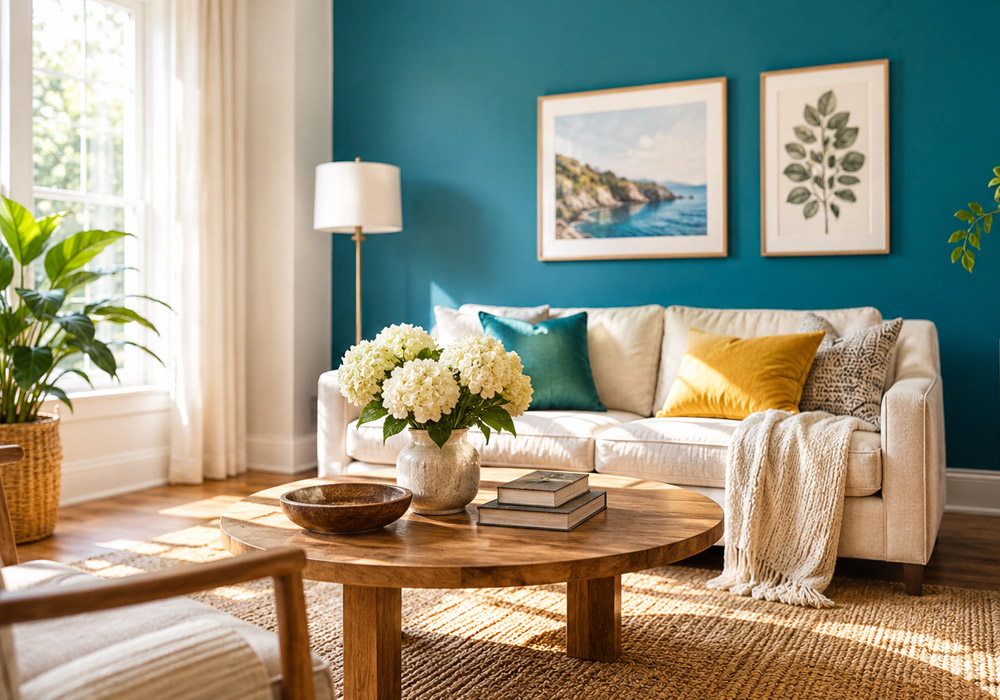
Changing the walls can create a different relationship between existing pieces. A new color might complement the undertones in a wood floor, provide stronger contrast for artwork, or make upholstery feel more connected to the rest of the space. Even cabinetry and fixtures can look noticeably different when the surrounding color changes.
This can be particularly useful in rooms assembled gradually over many years. Not every piece was purchased as part of one coordinated design, and that’s normal. The right wall color can act as the common thread that visually pulls those separate decisions together. Suddenly, the old furniture doesn’t look old. It looks like it belongs.
Testing Beats Trusting a Tiny Paint Chip
A small paint chip has an impossible job. It’s supposed to predict how a color will look across hundreds of square feet of wall, under changing daylight, beside existing materials, and beneath artificial lighting at night. That’s a lot to ask from a piece of paper that fits in a pocket.
Testing a color in the actual space provides much more useful information. Samples can be viewed near flooring, trim, cabinetry, furniture, and other permanent features. They can also be checked at different times of day to see how changing light affects the appearance.
Finish should be considered as part of that decision because sheen influences how a painted surface reflects light. The goal isn’t simply to find a color that looks good under ideal conditions. It’s to choose one that works with the real room that already exists. A little testing beforehand can prevent a very large wall from becoming the place where the experiment happens.
Conclusion
Paint has an unusual ability to make unchanged things look different. The same sofa, flooring, artwork, cabinets, and furniture can take on a completely new character simply because the color surrounding them has changed.
That transformation comes from relationships. Undertones interact with nearby materials, contrast changes what stands out, and natural and artificial light continuously influence how the walls appear. Choosing paint without considering those factors means ignoring much of what determines how the finished room will actually look.
Before replacing everything in a space that feels disconnected, it may be worth looking at its largest backdrop. Sometimes the furniture isn’t outdated and the flooring isn’t wrong. They may simply need a different color around them. One newly painted surface can make a room full of old decisions suddenly look like they were all made together.