Basements are sometimes treated as separate from the rest of a home, particularly when they are unfinished or used mainly for storage. From a building-performance perspective, however, the basement is part of the same enclosure that separates indoor living conditions from the outdoors and surrounding soil.
In Ontario, seasonal temperature changes can make foundation walls and other below-grade surfaces noticeably colder than the conditioned interior. Air leakage and moisture can add further complications. Effective basement insulation addresses these conditions as part of the home’s overall building envelope, helping create a more comfortable and manageable indoor environment.
Foundation Walls Affect More Than the Basement
Concrete and masonry foundation walls are durable structural materials, but they do not provide substantial resistance to heat flow on their own. When interior temperatures are higher than the temperature of the foundation, heat can move through the wall toward the colder exterior conditions.
The effects may be especially noticeable in a finished basement. Rooms can feel cool even when the heating system is operating, while floors and surfaces near exterior walls may remain uncomfortable. Temperature differences can also influence living areas above the basement.
Foundation insulation adds a thermal layer between the conditioned interior and colder foundation surfaces. When properly selected and installed, it can help maintain more consistent interior surface temperatures and reduce heat transfer through the below-grade portion of the building envelope.
Insulation performance is not determined by material alone. Gaps, penetrations, rim joists and transitions between building components can create paths for air movement. Addressing these areas is an important part of improving overall thermal performance.
Moisture Management Has to Come First
Basements require particular attention to moisture because foundation walls are in direct contact with soil. Water can enter through cracks or other defects, while moisture vapour can move through certain foundation materials. Indoor humidity can also create condensation when warm, moisture-containing air reaches a sufficiently cold surface.
For these reasons, basement moisture control should be considered before walls are covered with new finishes. Insulation should not be used as a way to conceal an active leak, drainage problem or persistently wet foundation.
The insulation assembly also needs to account for how moisture is expected to move and dry. A wall system that performs well in one house may not be appropriate for another if the foundation materials, drainage conditions or existing construction are different.
This is particularly important during renovations. Finishing an older basement changes the way its walls interact with indoor air. Moisture that was previously visible on an exposed foundation can become harder to detect once framing, insulation and drywall are installed. Identifying and correcting moisture concerns before closing the wall can reduce the risk of hidden deterioration later.
Air Sealing Supports Basement Energy Efficiency
Insulation slows heat transfer, but it does not automatically stop uncontrolled air movement. A basement can have insulated walls and still experience drafts if outside air is entering through gaps around service penetrations, windows, the rim joist or connections between the foundation and the structure above.
Air sealing and insulation therefore work best as parts of the same building-envelope strategy. Reducing uncontrolled air leakage can limit drafts and decrease the movement of humid indoor air toward cold surfaces.
This combined approach can contribute to better basement energy efficiency, particularly when a basement is heated and used as living space. It may also improve comfort elsewhere in the house because air movement through lower levels can influence conditions on upper floors.
Continuity matters. Small areas without adequate insulation or air sealing can become localized cold spots. Paying attention to corners, wall transitions and penetrations helps create a more consistent thermal and air-control layer rather than relying only on insulation placed between framing members.
Choosing an Insulation Approach Depends on the Basement
There is no single insulation method that is appropriate for every basement. The right approach depends on the foundation construction, existing moisture conditions, air leakage, available space and whether the basement will be finished, partially finished or left primarily as a utility area.
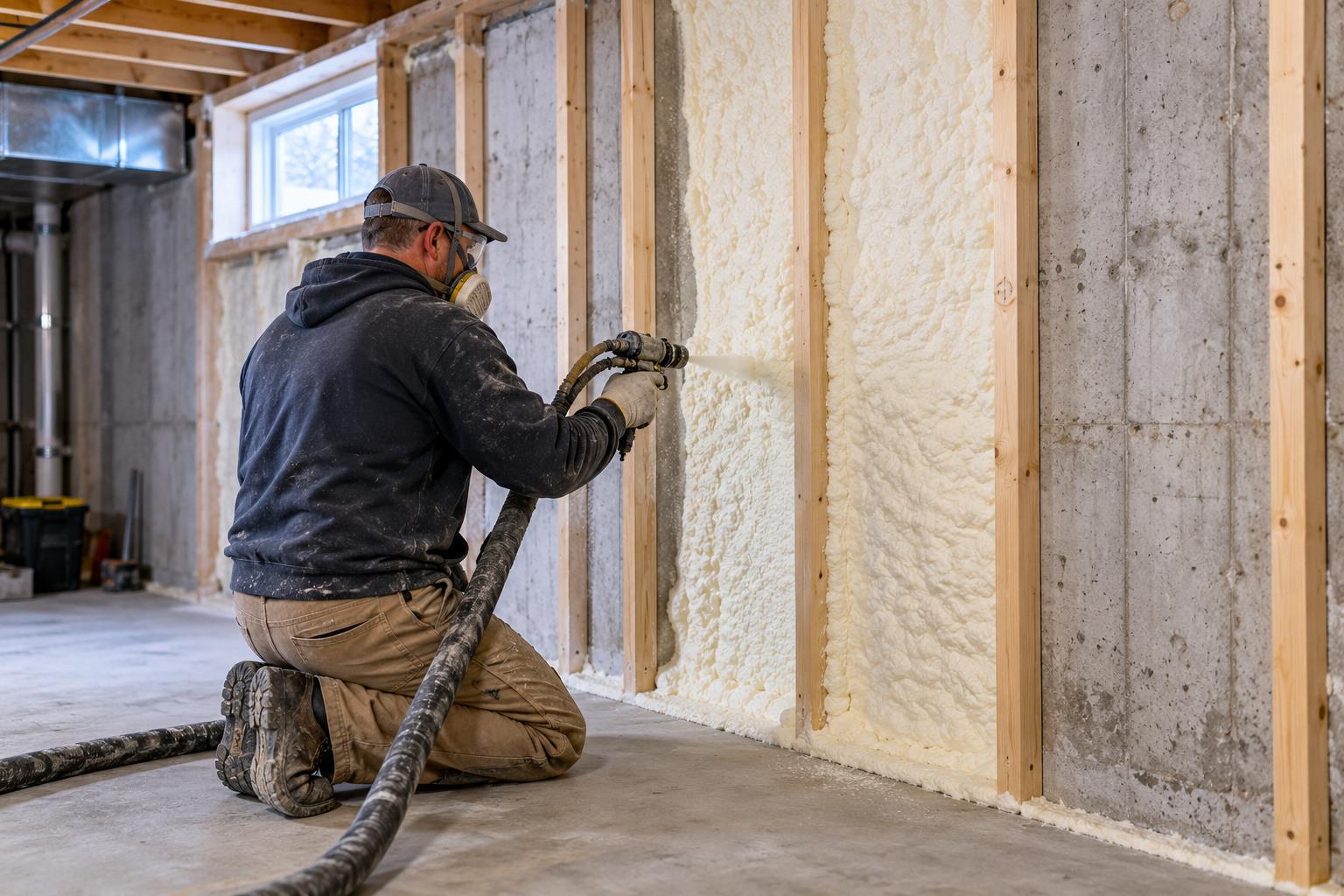
Different materials also interact with foundation walls in different ways. For example, a spray foam insulation basement wall assembly may provide insulation and air-sealing functions when designed and installed appropriately. Other basement wall insulation approaches can use rigid insulation or framed assemblies, depending on the conditions and renovation objectives.
Older Ontario homes can present additional considerations, including uneven foundation surfaces, previous renovations and areas where moisture or air leakage is difficult to identify visually. Professional assessment can be useful when homeowners are uncertain about the condition of the foundation or how a proposed assembly will perform.
Ontario contractor Reitzel Insulation provides information about basement insulation solutions for homeowners researching possible approaches to below-grade insulation. The appropriate system should ultimately reflect the specific foundation, moisture conditions and intended use of the space.
Think of the Basement as Part of the Whole Home
A basement renovation is often planned around visible improvements such as flooring, walls, lighting and storage. The less visible parts of the project can have an equally important effect on how the finished space performs.
Insulation, air sealing and moisture management influence one another. Improving only one element without considering the others can leave gaps in the building envelope or create conditions that were not present before the renovation.
For Ontario homeowners, this makes the foundation an important part of broader energy-efficiency planning. A well-considered below-grade insulation strategy can help moderate cold interior surfaces, reduce unwanted heat transfer and support more consistent indoor conditions.
The goal is not simply to add insulation to a wall. It is to understand how the basement interacts with soil, outdoor temperatures, indoor humidity and the rest of the house, then build an assembly suited to those conditions. When those factors are addressed together, the basement can function more effectively as part of the home’s complete building envelope.