Summer heat is one thing. The kind that pushes past 100°F for days at a stretch, sends your electricity bill through the roof, and turns your home into an oven by noon is something else entirely, says Skyline Property Management company. Getting ahead of it takes more than cranking the AC.
The good news is that most of what you can do costs less than a week of running your cooling system at full blast. A bit of prep in spring goes a long way when July hits hard.
Start With Your Windows and Doors
Your windows and doors are where most of the battle happens. Gaps in weatherstripping and worn-out seals let hot air funnel straight into your home all day, working against whatever cooling you have running. Walk around the frames of every exterior door and window with your hand, and you will quickly find the problem spots. Even minor gaps add up to a measurable difference in indoor temperature by midday.
Reflective window film is one of the more underrated fixes you can make. It reduces solar heat gain without blocking your view, and it is cheap enough to treat every window in the house for under $100. You see, a lot of heat does not sneak in through gaps; it radiates straight through the glass. Window film slows that process considerably, especially on south- and west-facing panes that catch the worst of the afternoon sun. If you want to go a step further, window inserts for heat add a second layer of insulation directly to the glass, which makes a noticeable difference in rooms that never seem to cool down.
Thermal curtains and blackout blinds work well alongside these physical barriers. Keep them closed during peak hours to reduce the load on your cooling system without doing anything complicated. The rooms stay darker but also cooler, which is worth the trade-off during a heat wave.
Door thresholds are easy to overlook, but they matter. A gap at the bottom of a front door is essentially a vent pulling warm air in from outside. Door sweeps cost next to nothing and install in minutes. Check every exterior door, including those leading to an attached garage, since garage temperatures spike hard in summer and bleed into the rest of the house.
Optimize Your Cooling System Before the Heat Hits
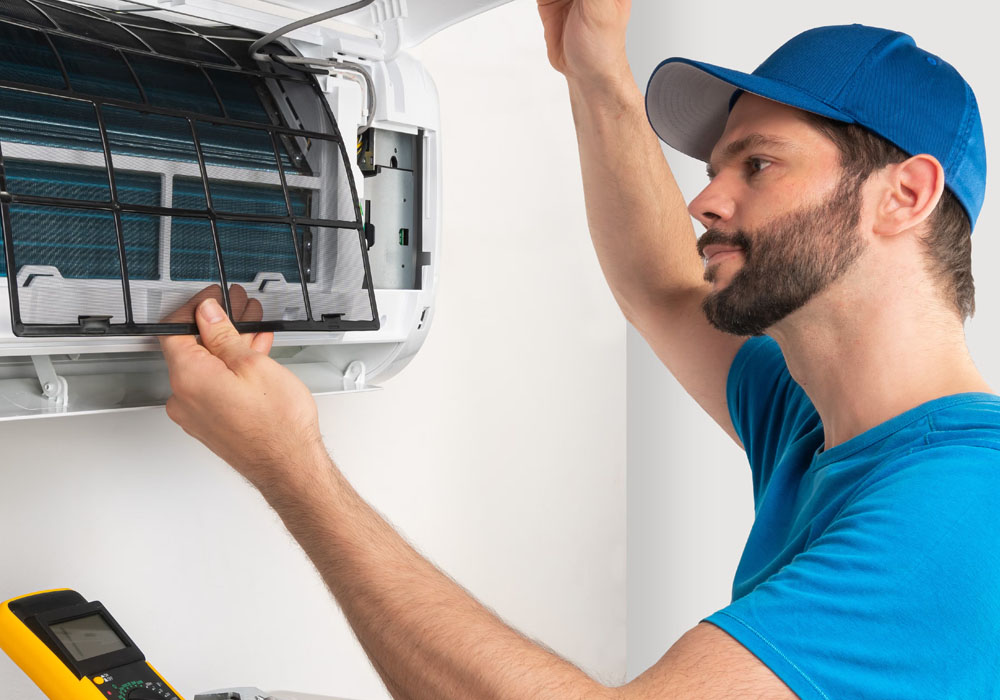
Scheduling an HVAC service call in spring is one of those things that feels unnecessary until your system dies at 4 PM on the hottest day of the year. A technician will check refrigerant levels, inspect coils, and catch anything that would cause the unit to work harder than it should. Catching a small issue in May is a lot cheaper than an emergency repair in August.
Air filters are something most people change too infrequently. A clogged filter restricts airflow, forcing the system to run longer cycles to reach your target temperature. During summer, check the filter every three to four weeks. If you have pets or live in an area with high dust levels, you may need to swap it even more often. It is a two-minute job that has a real impact on both performance and energy use.
A programmable thermostat gives you much better control than manually adjusting the temperature throughout the day. Set it to ease off during hours when no one is home and cool down before people return. Smart thermostats go further by learning your schedule and adjusting automatically. Over a full summer, the savings add up to more than the cost of the device.
The outdoor condenser unit also needs attention. Leaves, dirt, and debris build up around the fins, blocking airflow and making the compressor work harder and run hotter. Clear a two-foot perimeter around the unit and rinse the fins gently with a garden hose. It takes ten minutes and keeps the system running efficiently through the season.
Insulate and Ventilate Your Attic
The attic is where heat accumulates most aggressively during summer. On a hot day, temperatures up there can reach 150°F or higher, and that heat radiates down into your living spaces, whether you feel it directly or not. Checking your insulation depth is the first step. Most older homes are under-insulated by current standards, and adding more is one of the highest-return upgrades you can make for summer comfort.
Attic ventilation fans actively push that trapped hot air out rather than letting it sit. They work best when paired with adequate intake vents at the soffits so fresh air can replace what is being exhausted. Without that intake, the fan is just spinning without accomplishing much. A well-ventilated attic can be 20 to 30 degrees cooler than an unventilated one, and that difference shows up directly in how hard your cooling system has to work.
Attic bypasses are small gaps around light fixtures, pipes, and electrical penetrations that let conditioned air escape from the living space into the attic. Sealing these with caulk or spray foam costs almost nothing and makes a real difference in how efficiently your home holds a comfortable temperature. Most people insulate without bothering with this step, which means conditioned air is leaking out even as the system works to maintain it.
A radiant barrier is a reflective material installed under the roof decking that bounces heat away before it ever enters the attic space. It works best in climates with high solar exposure and is most effective when the barrier faces an air gap. It does not replace insulation but works well alongside it. If your attic regularly experiences extreme heat, it is worth considering.
Prepare Your Home’s Interior for Heat Resilience
LED bulbs generate a fraction of the heat that incandescent bulbs do. It sounds like a small detail, but running a home full of incandescent lights during summer is essentially running small heaters in every room. Switching to LEDs also cuts your electricity consumption across the board, which helps offset the higher load from running air conditioning.
Ceiling fan direction makes a bigger difference than most people expect. Set to counterclockwise in summer, a ceiling fan pushes air straight down, creating a wind-chill effect that makes a room feel several degrees cooler than it actually is. The fan does not lower the temperature, but it lets you set the thermostat a few degrees higher without losing comfort. That small thermostat adjustment adds up over weeks of continuous use.
Heat-generating appliances, including ovens, dishwashers, and dryers, add a real thermal load to your home during the hours when outdoor temperatures are already at their peak. Running these in the early morning or after sunset keeps that extra heat out of your living space during the afternoon. Cooking outdoors is also worth doing during a heat wave, both for comfort and to keep the kitchen from becoming the hottest room in the house.
A cool room strategy is one of the more practical approaches during extreme heat. Pick the most insulated, shaded room in the house and concentrate your cooling there using a portable unit or closed vents to redirect central air. Placing draft blockers at the base of the door helps contain the cold air. It is less about cooling the whole house and more about having somewhere reliably comfortable to retreat to when temperatures outside are brutal.
Conclusion
Preparing your home for extreme summer heat is less about any single fix and more about addressing the problem from a few directions at once. Windows, insulation, your cooling system, and how you use your space during the day all contribute to how livable your home stays when temperatures spike. Most of what makes the biggest difference is not expensive or technically complicated.
Start before the season arrives. Small preparation in spring means you are not scrambling in July, and your home stays cooler without leaning as hard on the air conditioning. That is better for your comfort, your equipment, and your electricity bill.