Demolition can create a difficult material-handling problem quickly. Broken slabs, foundations, curbs, and pavement are heavy, take up valuable space, and can be expensive to haul away. A practical concrete recycling plan helps project teams view that material as a resource for the next stage of work instead of treating every load as disposal-only debris.
For 2026 construction projects, the opportunity begins with planning. Old concrete can often become usable aggregate for base layers, access roads, fill areas, and drainage-related work, note Upper Management Realty professionals. The best outcome depends on the concrete’s cleanliness, processing quality, project specifications, and the distance between the demolition site, processing location, and final placement area.
Why Old Concrete Still Has Value
Concrete is durable, dense, and made largely from mineral aggregate. Once a structure reaches the end of its service life, those qualities do not disappear. After proper processing, crushed concrete may provide a stable, compactable material for many nonstructural and civil applications. This can help contractors control disposal costs, improve material availability, and reduce the need to import all-new stone.
Recycling does not mean every broken piece can be used anywhere. Concrete mixed with soil, trash, wood, drywall, insulation, or hazardous materials may require extra processing or may not be accepted at all. The goal is not to force a material into the wrong use. It is to identify the most suitable, approved use for the product that can realistically be produced.
What Happens After Concrete Leaves the Jobsite?
The path from demolition debris to recycled aggregate usually follows several quality-control steps:
- Inspection and acceptance:Loads are checked for prohibited materials and excessive contamination.
- Removal of unwanted materials:Workers and equipment remove visible wood, plastic, trash, and other debris.
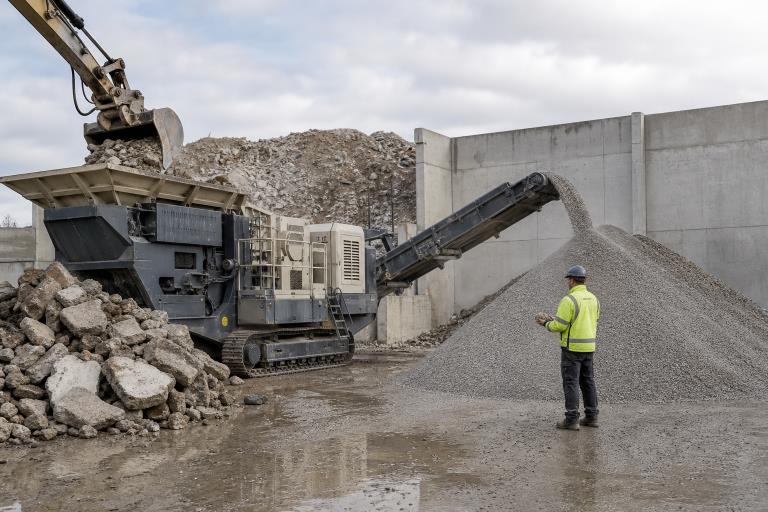
- Primary crushing:Large pieces are reduced to manageable sizes.
- Secondary crushing:Material may be crushed again when a smaller or more consistent product is needed.
- Screening:Screens separate particles into size ranges that suit different applications.
- Metal separation:Magnets remove reinforcing steel and other ferrous metals for separate recycling.
- Stockpiling and testing:Finished material is stored, sampled, and reviewed against project requirements.
Each stage affects performance. Consistent particle size supports predictable compaction, while cleaner material helps avoid weak spots, drainage problems, or inspector concerns. The Federal Highway Administration’s recycling guidance also emphasizes that recycled materials should be evaluated for their engineering and environmental properties, rather than selected solely because they are available.
Sorting Starts Before Demolition
Source separation is often the simplest way to protect the value of demolished concrete. A clean concrete pile is easier to process, easier to market, and less likely to create a rejected load. Before demolition begins, designate a stable stockpile area and make sure crews understand what belongs there.
Keep These Materials Out of the Concrete Stream
- Soil, clay, and excessive vegetation
- Wood, plastic, paper, and general jobsite trash
- Drywall, insulation, roofing debris, and glass
- Hazardous or suspect materials that require separate handling
- Asphalt or mixed debris that has not been approved for the intended facility
A simple checklist can prevent major problems: inspect the demolition area, identify coatings or unusual materials, separate stockpiles with clear signage, keep trucks out of muddy piles, and confirm acceptance rules before the first load leaves the site.
How Processing Changes Material Performance
Particle size and grading influence how recycled concrete behaves in the field. Larger, open-graded material may be better suited for drainage applications, while dense-graded material may be better suited for compacted base or fill. Uniform grading makes placement more predictable for equipment operators, engineers, and inspectors.
Moisture, dust, and contamination also matter. Too many fines can change compaction and drainage behavior. Excess moisture can add hauling weight and make handling difficult. Reinforcing steel must be removed safely, typically with magnets and manual inspection, before the aggregate is used.
Common Uses for Recycled Concrete
The final use should match the material’s cleanliness, strength, particle-size distribution, and local specifications. Common approved uses include:
- Roadway base and pavement subbase
- Structural or general fill where specifications permit
- Pipe bedding and utility trench support
- Drainage layers and site-preparation work
- Temporary access roads, work pads, and laydown areas
- Landscape stone, erosion-control features, and retaining-wall backfill
For example, a contractor removing an old warehouse slab may process clean concrete on or near the site, then use the finished aggregate beneath a temporary construction entrance or as base for the new building’s parking area. That approach can reduce double-handling while putting the recovered material to work quickly.
When Recycled Concrete May Not Be the Right Fit
Structural concrete mixes, high-durability applications, and projects with strict absorption, strength, or chemical-performance requirements may require additional testing, mix design review, and engineer approval. Transportation agencies, municipalities, owners, and design professionals can also set their own material requirements. Confirm them before hauling material or planning reuse around a specific application.
Cost Factors to Review in 2026
A good cost comparison goes beyond disposal fees. Review hauling distance, load cleanliness, truck waiting time, processing charges, stockpile space, and the cost of replacement aggregate. Track tons removed, tons accepted, haul miles, rejected loads, processing expenses, and the quantity of new aggregate avoided. A clear plan before demolition usually creates more savings than trying to solve the material problem after piles have accumulated.
Environmental Gains Without Overstating Them
Reusing processed concrete can reduce landfill demand and decrease the need for newly quarried aggregate. Shorter transport routes may also reduce fuel use, traffic exposure, and truck activity. Still, results vary with equipment, processing methods, contamination levels, and haul distance. Recycling is most credible when it is treated as a practical materials-management strategy, not as a claim that construction has no environmental impact.
A Simple Planning Process for Contractors
- Review the demolition scope and estimate concrete volume.
- Identify contaminants, coatings, and mixed materials before removal begins.
- Establish a clean, accessible stockpile area.
- Confirm facility acceptance rules, hauling logistics, and project specifications.
- Track where the material goes and how the recycled product is ultimately used.
Questions Project Managers Often Ask
Can reinforced concrete be recycled?
Yes. Reinforcing steel is commonly separated during processing, while the concrete is crushed and screened for reuse.
What happens when soil is mixed into a load?
Acceptance may be limited, added processing may be needed, or the load may be rejected. Keeping piles clean is usually less costly than correcting contamination later.
Does recycled concrete need testing?
Testing depends on the intended application and project specifications. Higher-risk or more demanding uses generally require more verification.
Final Perspective
Old concrete becomes most valuable when it is treated as a planned material stream rather than an afterthought. Clean sorting, realistic specifications, dependable processing, and careful logistics can turn demolition debris into a useful resource for the next phase of construction.