Drips on a clear, dry morning
Owners of a large storage shelter are sometimes surprised to find water beading on tractor seats and dripping from the roof on a morning when it has not rained. The cover is intact and the seams are sound. The water came from the air inside the building, and understanding where it came from explains most of what it takes to keep stored equipment, hay and materials in good condition.
Across much of the United States, from humid Southern summers to cold Northern nights, the conditions that cause this happen often. A fabric building holding tractors, feed or vehicles is a large volume of air, and the way that air behaves matters as much as the cover over it.
Why does a cover that does not leak still drip?
Air always holds some water as invisible vapor. Warm air can hold more than cold air, and when air cools past a certain temperature, called the dew point, the extra vapor turns back into liquid on the nearest cold surface.
On a clear night, the roof of any building loses heat to the open sky. A fabric cover is thin and has almost no ability to store heat, so it cools quickly and can drop below the temperature of the air beneath it. Warm, moist air rises inside, meets that chilled fabric and condenses on its underside, much like water forming on the outside of a cold glass of iced tea. Once enough gathers, it runs down the fabric or drips straight onto whatever is parked underneath.
PVC fabric stops water from getting in, which also means it stops vapor from getting out. That is a strength against rain and snow, but it changes how a fabric building has to be run. Moisture produced inside has to leave through openings, or it stays and condenses.
Where the moisture comes from
In most cases the building is not humid because of the weather alone. It is being fed water from inside, often by the very things it was put up to protect, and the sources tend to add up:
- Bare soil floors releasing ground moisture
- Wet or snow-covered equipment parked inside
- Livestock breathing and producing manure
- Unvented propane or kerosene heaters
- Freshly cut hay or damp bedding
Each of these adds water vapor that has nowhere to go if the doors stay shut. A single piece of equipment brought in dripping after a wet day can add more moisture than people expect. Letting machines drip dry outside, or knocking packed snow off before parking, removes a surprising share of the load.
The floor under a fabric structure
The ground itself is often the biggest and most constant source. Soil beneath a fabric structure keeps releasing moisture, especially after rain or snowmelt raises the water table. Concrete, a compacted gravel base, or a heavy vapor barrier laid under gravel slows that release considerably. Grading the surrounding ground so water flows away from the base, rather than toward it, keeps the floor from turning into a reservoir.
Ventilation does more than any single fix
Because moisture can only escape through openings, air movement is the most effective control in any fabric building. The goal is to swap moist inside air for drier outside air before it reaches the cold roof, and to keep it moving rather than letting it sit in still pockets at the ends and corners.
Drive-through doors at both ends create a natural cross breeze when opened on dry days. Even partly opening them for a few hours lets humid air escape. Where fitted, gable vents or openings near the peak take advantage of the fact that warm, moist air rises, letting it leave at the highest point instead of pooling under the roof.
Timing matters. Opening the building on a dry, breezy afternoon brings in air that can carry moisture away. Opening it during a humid, foggy morning can do the opposite, drawing damp air in to settle on cold metal. An inexpensive hygrometer inside and a glance at the forecast are usually enough to pick the right hours.
Heat without extra water
Many owners add a heater to work inside a fabric storage building during cold weather. Unvented propane and kerosene heaters produce water vapor as part of burning fuel, so they can make condensation worse while warming the space. They also produce carbon monoxide, which is dangerous in any enclosed building.
Vented heaters that carry combustion gases outside avoid both problems. Any heater also needs clearance from the fabric according to the heater manufacturer’s instructions, and fuel should never be stored close to it. A carbon monoxide alarm is a sensible addition wherever people work inside with engines or heaters running.
Hay needs to be dry before it goes in
Hay stored too wet does more than grow mold. Microbial activity inside tightly packed, moist bales generates heat, and in some cases that heat builds to the point of spontaneous combustion. Agricultural extension services in many states advise checking moisture content before stacking and monitoring bale temperature for the first few weeks.
A fabric shelter keeps rain off stacked hay, but it cannot dry hay that went in damp. Stacking bales on pallets or a gravel base, rather than bare soil, and leaving space between the stack and the walls lets air circulate around it. Keeping hay away from the equipment side of the building also stops dust and chaff from settling on engines and radiators.
Summer heat works the same way under fabric
The same thin cover that loses heat quickly at night gains heat quickly under strong sun. Temperatures inside a closed fabric building can climb well above the outside air on a hot afternoon. Opening doors and vents in summer releases that heat, protecting stored materials such as plastics, rubber hoses and batteries that age faster when kept hot.
A simple test
The easiest way to judge whether a building is managing its air well is to look at the underside of the roof early on a cool, clear morning. Dry fabric means moisture is escaping. Beads of water mean more ventilation, a drier floor or fewer moisture sources are needed. Repeating the check a week after each change shows which one made the difference, and it takes only a minute on the way to the first job of the day.
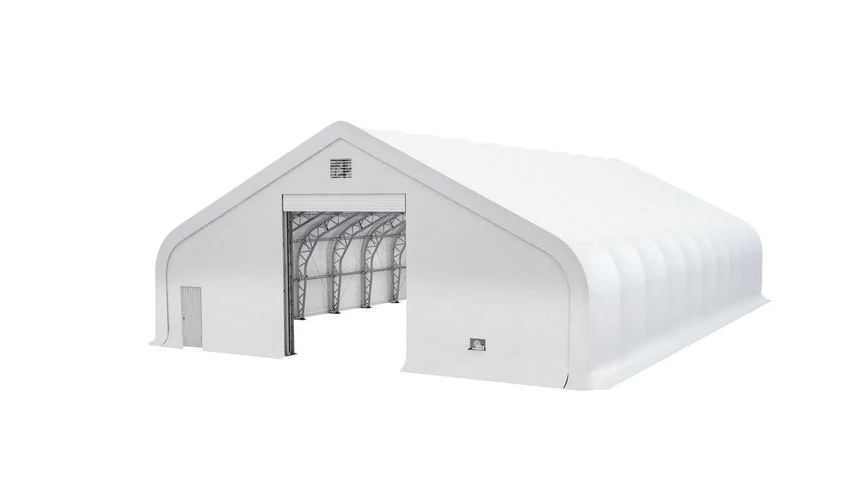
The TMG Industrial Heavy Series 50 by 80 foot dual truss building uses a 32 ounce PVC cover with drive-through doors at both ends, which suits this approach well, since those doors give a large, easy opening for moving air through the full length of the space.