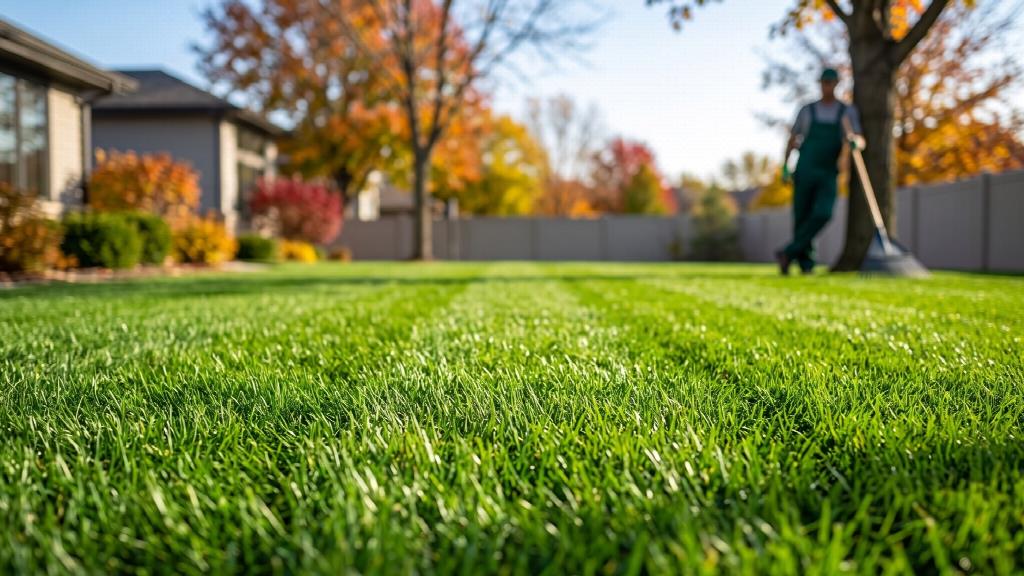
As summer comes to an end and temperatures begin to drop, your lawn needs to be prepared for the colder months ahead. A little preparation in the fall can help protect your grass from winter damage and give it a healthier start when spring arrives.
Whether you maintain your lawn yourself or rely on professional lawn care, there are several important steps to take before winter.
Keep Mowing Until Growth Slows
Grass may continue growing well into the fall, depending on the weather. Continue mowing as needed, but gradually lower the cutting height toward the end of the season.
Avoid cutting the grass extremely short. A lawn that is cut too low can be more vulnerable to cold temperatures, while grass that is left too long can become matted under snow and may be more susceptible to disease.
A final mow before winter should leave the grass at a moderate height that provides enough protection without becoming overly long.
Remove Leaves and Debris
Fallen leaves can quickly cover your lawn in the fall. While a thin layer may not cause major problems, thick layers of leaves can block sunlight and air from reaching the grass.
Wet leaves can also become heavy and compacted, creating conditions that can damage the lawn underneath. Regularly rake or mulch leaves throughout the fall rather than allowing them to build up.
Don’t forget to remove branches, sticks and other debris as well.
Aerate Compacted Soil
Over the course of the year, soil can become compacted from foot traffic, outdoor activities and regular lawn use. Compacted soil makes it harder for water, oxygen and nutrients to reach the roots.
Fall is often a good time to aerate cool-season lawns. Core aeration creates small openings in the soil, allowing the grass roots to access the resources they need before winter.
For larger properties or lawns with significant compaction, professional lawn care can help determine whether aeration is needed and how frequently it should be done.
Apply Fall Fertilizer
Fall is an important time to provide your lawn with nutrients. A suitable fall fertilizer can help grass maintain healthy roots as temperatures become cooler.
The right fertilizer and application rate depend on factors such as your grass type, soil condition and local climate. Applying too much fertilizer can cause problems, so it is important to follow the product’s instructions or have the lawn assessed by a professional.
Address Weeds
Fall can be a useful time to deal with weeds that are competing with your grass for nutrients, water and sunlight.
Removing weeds before winter can help reduce the number of unwanted plants that remain in the lawn and potentially become a bigger problem the following spring.
If weeds are widespread, identifying the specific weed first can help determine the most appropriate treatment.
Overseed Thin Areas
If your lawn has thin or bare areas, fall can be a good opportunity to overseed. Cooler temperatures and regular moisture can create favourable conditions for grass seed to establish before winter.
Before overseeding, prepare the soil and choose a grass seed appropriate for your lawn and growing conditions. Keep newly seeded areas consistently moist until the grass has established.
Avoid Excessive Traffic on Frozen Grass
Once temperatures drop and the lawn becomes frozen or covered with frost, try to limit unnecessary foot traffic.
Walking repeatedly across frozen grass can damage the grass blades and potentially leave visible tracks or flattened areas. When possible, use walkways and avoid spending extended periods on the lawn during freezing conditions.
Give Your Lawn a Head Start on Spring
Winter preparation does not need to be complicated, but completing a few important tasks in the fall can make a noticeable difference when the growing season returns. Mowing properly, removing leaves, aerating compacted soil, addressing weeds and providing appropriate nutrients can all help protect your lawn through the winter.
For homeowners who don’t have the time or equipment to handle these tasks themselves, professional lawn care can provide a convenient way to keep the property maintained throughout the changing seasons.
With the right preparation in the fall, your lawn can enter winter in better condition and be ready for a fresh start when spring arrives.