Porch posts serve both practical and visual functions. They may support a roof or beam, frame the front entry, and establish the rhythm of the porch from the street. A carefully selected set of custom turned porch posts can help a new porch feel intentional or help an existing exterior retain its original character.
The best choice starts with the home itself. Rather than selecting a post only because it looks appealing on its own, consider its proportions, materials, trim details, exposure to weather, and whether it carries structural load.
Why Porch Posts Matter
Posts create a transition between the open yard and the sheltered porch. Thin posts beneath a broad, heavy-looking roof can seem undersized, while oversized posts can crowd a compact entry. When posts are structural, their dimensions and connections must also be suited to the loads they support. Decorative wraps, on the other hand, can alter the finished appearance of a support without necessarily changing the underlying structural member.
How To Match Posts To The Home
Look for design cues already present on the exterior. Window casings, door trim, railing profiles, siding patterns, and roof pitches all provide useful direction. The goal is visual continuity, not exact duplication of every detail.
Style Questions To Ask
- Does the house rely on clean, simple lines or formal ornament?
- Are trim boards narrow and restrained, or broad and decorative?
- Would a square, round, tapered, fluted, or chamfered profile fit the exterior?
- Should the posts blend with the trim color or provide deliberate contrast?
Traditional houses often suit turned or tapered forms. Farmhouse-inspired exteriors commonly use sturdy square posts. Craftsman-style porches typically pair wider posts with substantial bases, while modern homes often benefit from straightforward profiles with minimal detailing.
How To Choose The Right Post Size
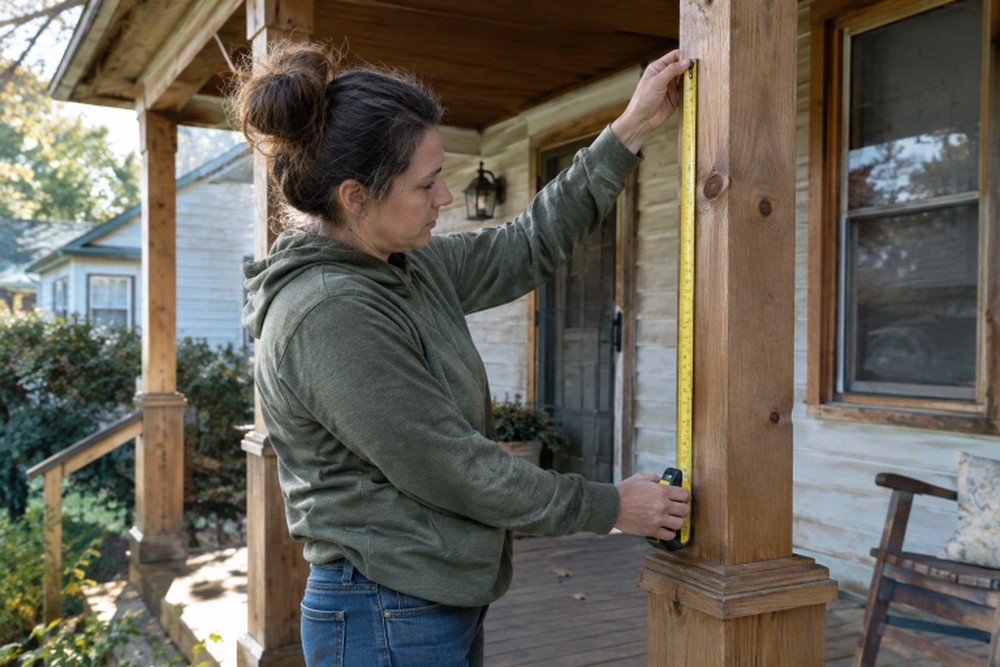
Measure before ordering replacements. Record the clear height from the porch floor to the beam, the porch depth, the roof width, the spacing between posts, and the width of nearby trim. Then compare the proposed post width with the beam, railing, and front door. Viewing distance matters too: posts seen from the sidewalk need enough visual presence to read as part of the façade.
If a post supports a roof, an elevated porch, or another load-bearing element, do not choose its size by appearance alone. A qualified contractor, engineer, or building official can help determine the appropriate structural requirements.
Comparing Porch Post Materials
Solid Wood
Wood offers warmth, repairability, and a broad range of profiles. It can be painted or stained, but its long-term performance depends on the species, finish, detailing, and protection against trapped water.
Engineered Wood
Some engineered wood products offer consistent dimensions and are useful for painted exterior components. Confirm that the product is rated for the intended exposure and follow the manufacturer’s installation and finishing instructions.
Composite and Cellular PVC
Composite and cellular PVC options can reduce concerns about rot in exposed trim applications. Their appearance, expansion behavior, fastening methods, and repair options differ by product, so use compatible fasteners and installation details.
Masonry and Metal
Brick, stone, concrete, aluminum, and steel can suit particular architectural styles or structural conditions. These materials may require different foundations, connection methods, corrosion protection, and installation equipment than wood-based posts.
How Climate Affects Material Choice
Local conditions should influence every material decision. In wet areas, prioritize drainage, drying, and decay resistance. In hot, sunny locations, consider surface heat and finish fading. Cold climates call for attention to snow, ice, freeze-thaw exposure, and water collecting near bases. Coastal projects should account for wind-driven rain, salt exposure, and corrosion-resistant hardware. In termite-prone areas, ask local professionals about approved materials and inspection practices.
Water, Drainage, And Post Bases
Most avoidable post-damage begins where water lingers. A post base should not trap moisture against wood or allow debris to collect around the bottom. Flashing, overhangs, sloped caps, suitable post bases, intact caulk joints, and drainage away from the home all help manage water.
- Check the base for soft spots, dark staining, cracks, and peeling paint.
- Inspect the shaft for splits, insect activity, or finish failure.
- Check the top and bottom connections for any gaps, movement, or corrosion.
- Keep leaves, mulch, and soil from building up against the post.
Permits, Codes, And Safety Checks
Rules can differ by city, county, project type, and whether a porch is attached to the home or supports a roof. Before demolition or installation, ask the local building department about permits, footings, connections, guards, railings, setbacks, and required inspections. For example, New York City identifies posts, foundations, anchors, bracing, railings, and steps among the elements reviewed in deck and porch installations. Requirements elsewhere may be different.
Repairing Posts On Older Homes
On an older home, replacement is not always the first or best option. Minor surface deterioration may be repairable, while deep decay, major cracking, or movement may justify replacement. Photograph and measure the original post before removal, including its profile, width, trim blocks, and decorative details. Matching those features helps preserve the home’s proportions even when new material is required.
A Simple Maintenance Plan
Seasonal Checks
- Inspect posts at least twice each year for loose connections, cracks, soft wood, and insect damage.
- Clear debris from bases and check nearby gutters and downspouts.
- Examine caulk, flashing, and paint or stain for openings that allow water to enter.
- Clean surfaces with an exterior-appropriate product and promptly touch up damaged finishes.
After Severe Weather
After heavy wind or storms, look for new gaps at beams, trim, and roof connections. If the porch shifts, sags, or feels unstable, avoid assuming the issue is cosmetic and arrange a professional evaluation.
Common Questions About Porch Posts
Do porch posts always support the roof?
No. Some are structural, while others are decorative wraps or non-load-bearing elements. Confirm the role of a post before removing, cutting, or altering it.
Are round posts better than square posts?
Neither shape is automatically better. The appropriate profile depends on the home’s style, available space, structural needs, and maintenance plan.
Can a damaged porch post be repaired?
Minor finish damage may be repairable. Extensive decay, structural splitting, or visible movement calls for closer review and may require replacement.
Conclusion
Well-chosen porch posts support more than a roofline. They provide the entrance scale, reinforce the architectural style, and help the porch withstand everyday weather. By considering proportion, material, drainage, maintenance, and local requirements before work begins, homeowners can make choices that look appropriate and perform reliably over time.