Introduction
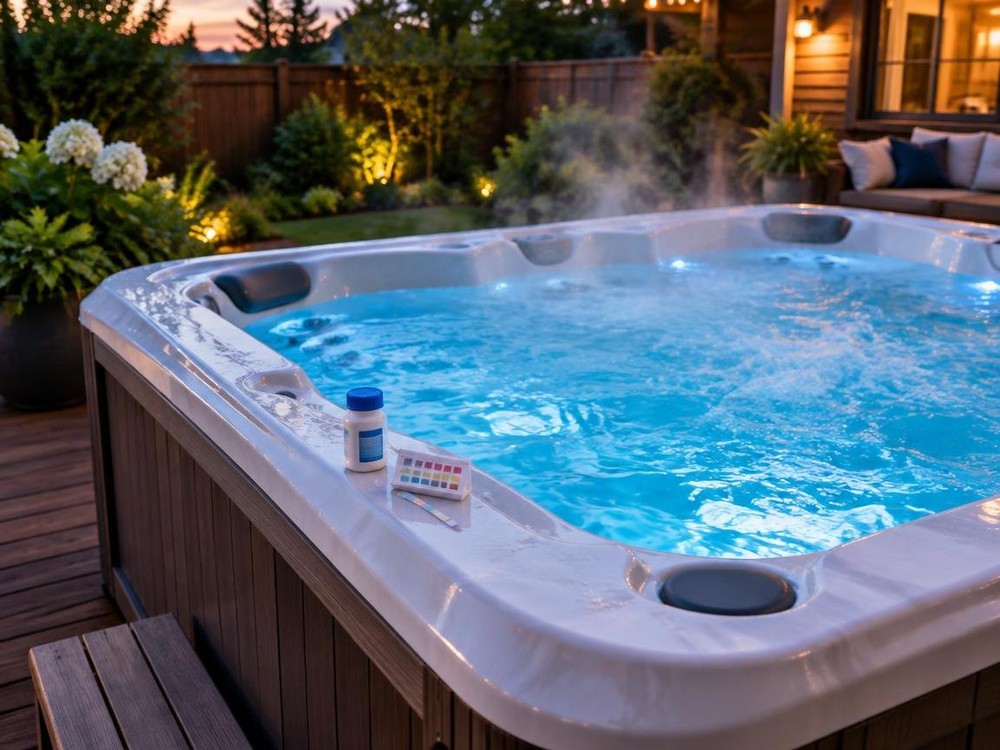
Imagine sinking into your hot tub after a long day, the warm water soothing your muscles. This dream-like experience hinges on one crucial factor: balanced hot tub water chemistry. Without proper care, that inviting oasis can quickly become an irritating or even unsafe environment.
Many new hot tub owners feel overwhelmed by the thought of managing chemicals. We understand it can seem complicated, but with the right knowledge and a consistent routine, maintaining crystal-clear, healthy water is surprisingly straightforward.
This comprehensive guide is designed to demystify hot tub water chemistry for you. We’ll explore the essential chemicals, their ideal target ranges, and the correct order for adding them. We’ll also dive into why hot tub chemistry is unique compared to pools, how often to test, and effective solutions for common problems like cloudy water or skin irritation. Our goal is to empower you with the expertise needed to maintain your spa. Throughout this guide, we’ll refer to effective strategies, including the core principles of Skovish hot tub water chemistry to keep your water pristine and your equipment protected.
Core Parameters and the Skovish Hot Tub Water Chemistry Framework
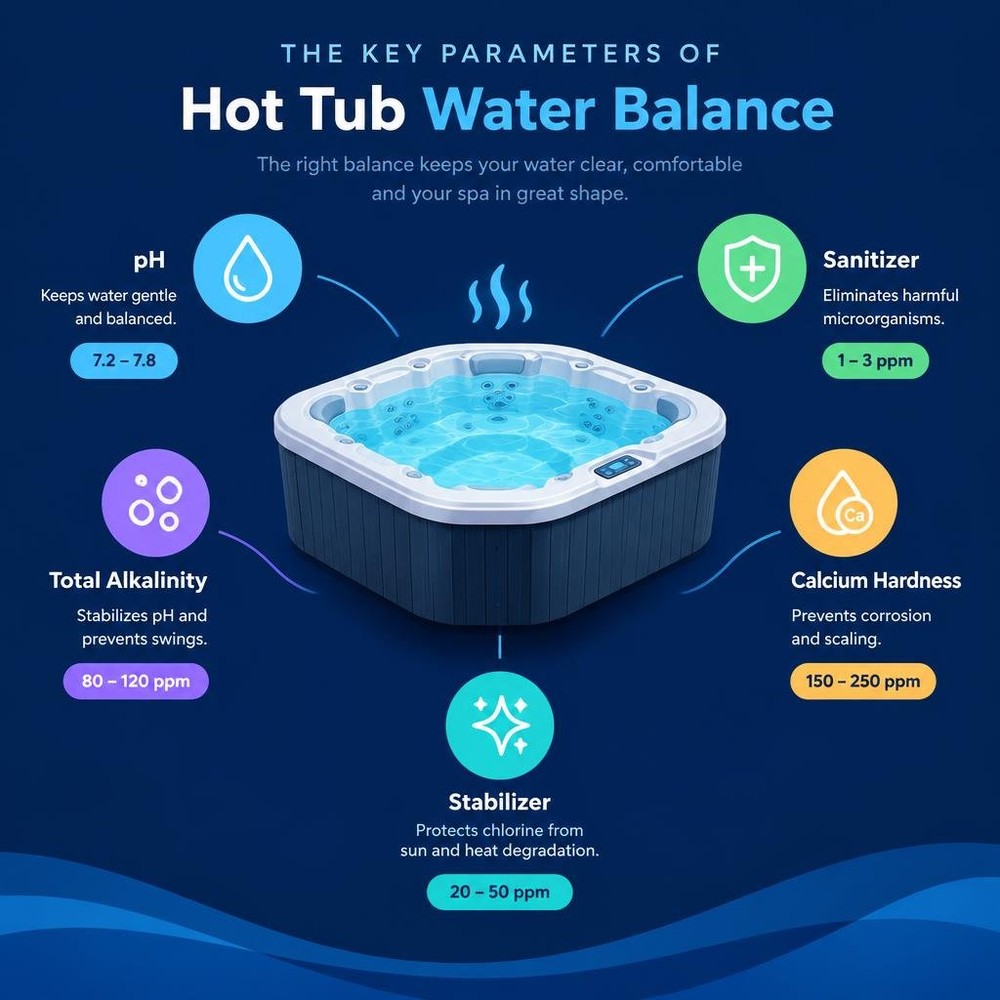
Understanding the fundamental chemical parameters is the first step toward mastering hot tub maintenance. Think of these as the vital signs of your spa water. Each parameter plays a critical role in bather comfort, sanitizer effectiveness, and the longevity of your hot tub’s components. Ignoring any one can lead to a cascade of problems, from cloudy water to damaged equipment.
Let’s break down the essential parameters:
- pH Levels: This measures how acidic or alkaline your water is, on a scale of 0 to 14. A pH of 7 is neutral. In hot tubs, the ideal range is slightly alkaline, between 7.4 and 7.6, though 7.2 to 7.8 is generally acceptable. If pH is too low, the water becomes acidic, leading to eye and skin irritation, and corrosion of equipment. If it’s too high, the water becomes alkaline, reducing sanitizer effectiveness, causing cloudy water, and promoting scale buildup.
- Total Alkalinity (TA): Often called the “pH buffer,” total alkalinity measures the amount of alkaline substances dissolved in the water. Its primary job is to stabilize pH, preventing it from fluctuating wildly. The ideal range for TA is 80 to 120 parts per million (ppm). Low alkalinity makes pH difficult to control, causing it to bounce up and down. High alkalinity can lead to persistently high pH and cloudy water.
- Calcium Hardness (CH): This measures the amount of dissolved calcium and magnesium in your water. The ideal range is 150 to 250 ppm. In hard-shell acrylic spas, maintaining this level is crucial. If calcium hardness is too low, the water becomes “soft” and corrosive, seeking out minerals from your hot tub’s surfaces and equipment, potentially damaging heaters and pump seals. If it’s too high, it can lead to scale buildup on surfaces and equipment, reducing efficiency and potentially causing blockages.
- Sanitizer Levels (Free Chlorine or Bromine): These are the workhorses that kill bacteria, viruses, and other contaminants, keeping your water safe and clean. For chlorine, the ideal range is 3 to 5 ppm. For bromine, it’s 3 to 5 ppm. Maintaining consistent sanitizer levels is paramount, as hot water provides an ideal breeding ground for microbes.
- Total Dissolved Solids (TDS): This measures the total concentration of all dissolved substances in your water, including minerals, salts, and organic matter. Over time, TDS naturally increases as chemicals are added and bather waste accumulates. While there’s no direct chemical to lower TDS, levels above 1,500 ppm (or 2,500 ppm as a maximum threshold) indicate that your water is “old” and needs to be drained and refilled. High TDS can make water cloudy, reduce sanitizer efficiency, and lead to foamy water.
These parameters are interconnected. For instance, high total alkalinity can make it challenging to lower pH, and an unbalanced pH can render your sanitizer less effective. A comprehensive understanding, like that offered in Skovish Pools & Spas’ guide to hot tub water balance, is key to preventing problems before they start.
Here’s a quick reference for the core parameters:
| Parameter | Ideal Range (ppm) | Function | Key Chemical Adjusters |
|---|---|---|---|
| pH | 7.4 – 7.6 | Measures acidity/alkalinity; impacts bather comfort and sanitizer efficacy. | pH Increaser (soda ash), pH Decreaser (sodium bisulfate/dry acid) |
| Total Alkalinity | 80 – 120 | Buffers pH, preventing rapid fluctuations. | Alkalinity Increaser (sodium bicarbonate), pH Decreaser (lowers TA) |
| Calcium Hardness | 150 – 250 | Prevents corrosive water and scale formation. | Calcium Hardness Increaser (calcium chloride) |
| Sanitizer | 3 – 5 (Cl) / 3 – 5 (Br) | Kills bacteria and viruses, keeps water safe. | Chlorine granules (dichlor), Bromine tablets/granules |
| Total Dissolved Solids | < 1,500 | Indicator of water age; high levels reduce sanitizer efficiency. | Drain and refill |
Applying Skovish Hot Tub Water Chemistry Balancing Sequence
The order in which you add chemicals to your hot tub is not just a suggestion; it’s a critical sequence that ensures effective balancing and prevents wasted chemicals or ongoing water problems. Many persistent issues, like cloudy water, often stem from chemicals being added in the wrong order. We always advise following a strict, step-by-step process.
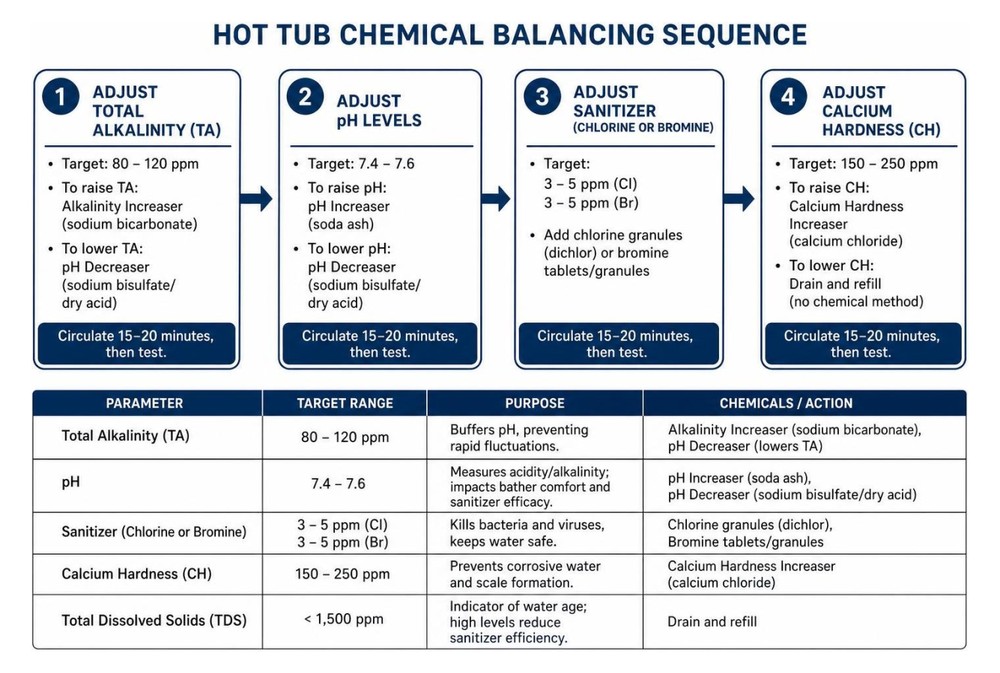
Here’s the correct sequence for balancing your hot tub water:
Adjust Total Alkalinity (TA) First: Think of total alkalinity as the foundation for your pH. It acts as a buffer, preventing your pH from swinging wildly. If your TA is out of range, any attempts to adjust pH will likely be temporary and frustrating.
- To raise TA: Use an alkalinity increaser, typically sodium bicarbonate (baking soda).
- To lower TA: pH decreaser (sodium bisulfate or dry acid) will also lower TA. If TA is very high, you might need to use a pH decreaser, even if your pH is already in range, then re-adjust pH.
- After adjusting, run your jets for 15-20 minutes to allow the chemical to disperse.
Adjust pH Levels Second: Once your total alkalinity is within the ideal range of 80-120 ppm, you can accurately adjust your pH. With TA stabilized, your pH adjustments will be much more stable and effective.
- To raise pH: Use a pH increaser, typically soda ash (sodium carbonate).
- To lower pH: Use a pH decreaser (sodium bisulfate or dry acid).
- Again, circulate the water for 15-20 minutes after adding, then retest.
Adjust Sanitizer (Chlorine or Bromine) Last: With TA and pH balanced, your sanitizer can now work at its optimal efficiency. Adding sanitizer before balancing TA and pH is like trying to build a house on quicksand – it won’t hold.
- Add your chosen sanitizer (chlorine granules or bromine) to reach the target range (3-5 ppm for chlorine, 3-5 ppm for bromine).
- Circulate for 15-20 minutes.
Adjust Calcium Hardness (CH) (If Needed): While important, calcium hardness is less volatile than pH and TA and doesn’t directly impact sanitizer effectiveness in the short term. It’s usually adjusted during a fresh fill or when levels consistently drop.
- To raise CH: Use a calcium hardness increaser (calcium chloride). There are no chemical methods to lower CH; if it’s too high, dilution with softer water is the only solution.
- Circulate for 15-20 minutes.
Always add chemicals with the jets running to ensure rapid dispersion. Never mix different chemicals together directly, as this can create dangerous reactions. Always add chemicals to water, not water to chemicals. After each chemical addition, allow ample circulation time (15-20 minutes) before retesting and moving to the next step. This patience is key to achieving and maintaining a balanced spa.
Chlorine vs Bromine: Choosing Your Sanitizer
When it comes to sanitizing your hot tub, the two most common choices are chlorine and bromine. Both are effective at killing bacteria and viruses, but they have distinct characteristics that make them suitable for different preferences and situations. Understanding these differences will help you choose the best sanitizer for your spa.
Chlorine (typically Dichlor):
- Pros:Fast-acting: Chlorine sanitizes quickly, making it a good choice for immediate disinfection, especially after heavy bather loads.
- Strong oxidizer: It’s excellent at breaking down organic contaminants, keeping water clear.
- Cost-effective: Generally less expensive than bromine.
- Easy to dose: Granular dichlor dissolves readily.
- Cons: Less stable at high temperatures: Chlorine depletes faster in hot water, requiring more frequent dosing.
- UV degradation: Outdoor hot tubs exposed to sunlight will lose chlorine rapidly unless stabilized with cyanuric acid (CYA), which is generally not recommended for hot tubs due to its tendency to build up quickly in small volumes and reduce sanitizer effectiveness.
- Chloramines: When chlorine combines with bather waste, it forms chloramines, which can cause strong chemical odors and eye/skin irritation. These need to be removed with shock treatment.
- Odor: Can have a stronger “pool smell” for some users.
Bromine:
- Pros: More stable at high temperatures: Bromine holds up better in hot water, leading to more consistent sanitization and potentially less frequent dosing than chlorine.
- Less irritating: Many users find bromine to be gentler on the skin and eyes, with a milder odor.
- Bromamines are active: Unlike chloramines, bromamines (the byproducts of bromine reacting with contaminants) still retain some sanitizing power. They also don’t typically produce the strong odor associated with chloramines.
- “Bromine bank”: Bromine can be reactivated by non-chlorine shock, creating a continuous sanitizing effect.
- Cons:Slower acting: Bromine sanitizes a bit slower than chlorine.
- More expensive: Generally costs more than chlorine.
- No UV protection: Cannot be stabilized against UV light, so outdoor, uncovered spas might still see faster depletion.
- Tablets/granules: Often comes in tablet form for feeders, which can be less flexible for immediate adjustments than granular chlorine.
Which is better? Neither is objectively “better”; it depends on your priorities. If you prioritize fast action, lower cost, and don’t mind more frequent testing/dosing, chlorine might be for you. If you prefer gentler water, less odor, and more stability in hot temperatures, bromine could be a better fit. Never mix chlorine and bromine in your hot tub, as this can create dangerous chemical reactions. If you wish to switch sanitizers, you must completely drain, clean, and refill your hot tub.
Here’s a comparison table:
| Feature | Chlorine (Dichlor) | Bromine |
|---|---|---|
| Thermal Stability | Lower; depletes faster in hot water | Higher; more stable in hot water |
| Oxidation Rate | Faster; strong oxidizer | Slower; good oxidizer |
| Irritation/Odor | Can cause chloramines (strong odor, irritation) | Bromamines less irritating, milder odor |
| Cost | Generally more cost-effective | Generally more expensive |
| UV Resistance | Can be stabilized (CYA), but not recommended for spas | No UV stabilizer available |
| Byproducts | Chloramines (inactive, irritating) | Bromamines (still active, less irritating) |
| Application | Granules for daily dosing/shock | Tablets for feeders, granules for shock/boosting |
| Skin Sensitivity | Can be harsher for sensitive skin | Often preferred for sensitive skin |
Why Hot Tub Water Chemistry Differs from Swimming Pool Care
Many people assume that hot tub chemistry is just like pool chemistry, only on a smaller scale. This is a common misconception that can lead to significant problems. While both require sanitation and balancing, the unique environment of a hot tub presents distinct challenges that necessitate a different approach to water care.
The primary factors that differentiate hot tub chemistry are:
High Water Temperature: Hot tubs typically operate between 100°F and 104°F (38°C to 40°C), significantly warmer than the average swimming pool. This elevated temperature has several critical effects:
- Accelerated Chemical Reactions: For every 18°F (10°C) increase in water temperature, chemical reactions in the water can double in speed. This means sanitizers deplete much faster, and pH can drift more rapidly.
- Increased Bacterial Growth: Warm water is an ideal breeding ground for bacteria, including resilient types like Pseudomonas aeruginosa, which can cause skin rashes (“hot tub rash”) if sanitizer levels are not meticulously maintained.
- Enhanced Off-Gassing: Heated water releases dissolved gases, particularly carbon dioxide (CO2), more quickly. This CO2 off-gassing directly contributes to a continuous rise in pH.
- Bather Vulnerability: The warm water opens skin pores, making bathers more susceptible to absorbing contaminants and developing skin infections if water quality is poor.
Small Water Volume: A typical hot tub holds 200-500 gallons, compared to a swimming pool’s 10,000-25,000 gallons. This small volume means:
- Magnified Impact of Additions: Even small amounts of chemicals can have a dramatic effect on water balance. Over-dosing is a much greater risk.
- Rapid Contaminant Accumulation: The ratio of bathers to water volume is exponentially higher in a hot tub. Four people in a 400-gallon hot tub create a relative bather load equivalent to 250 people in a 25,000-gallon swimming pool! This means a massive influx of organic contaminants (sweat, body oils, lotions, hair products, detergents) in a very small body of water.
- Faster TDS Buildup: With frequent chemical additions and heavy bather loads, total dissolved solids (TDS) accumulate much faster, necessitating more frequent draining and refilling.
High Bather-to-Water Ratio: This is perhaps the most significant difference. Every bather introduces a substantial amount of organic waste. Two people soaking for just 15-20 minutes in a 400-gallon spa can consume 1 ppm of free chlorine. This intense contaminant load means hot tubs require:
- Higher Sanitizer Demand: You need to maintain consistently higher sanitizer levels and perform more frequent shock treatments to keep up with the demand.
- More Frequent Testing: Daily or pre-use testing becomes essential to monitor and adjust sanitizer and pH levels.
Treating a hot tub like a miniature swimming pool is a recipe for disaster. The unique thermodynamics and bather load dynamics demand a specialized approach to water chemistry to ensure bather safety, protect equipment, and provide a truly relaxing experience.
Mastering Dosing in Skovish Hot Tub Water Chemistry
Given the small volume and high temperatures of hot tubs, precise dosing is not just recommended; it’s absolutely critical. Unlike swimming pools, where small errors in chemical addition might be absorbed by thousands of gallons of water, even minor over-dosing in a hot tub can drastically throw off your water balance, leading to irritation, cloudy water, and equipment damage.
Here’s why mastering dosing is so important for hot tubs:
- Sensitivity to Small Additions: A 400-gallon hot tub is highly reactive. Adding just a few ounces of a chemical can significantly change a parameter like pH or alkalinity. This means we must always measure chemicals precisely, often in small increments, and allow time for them to disperse before retesting and making further adjustments.
- Rapid Sanitizer Consumption: The combination of high heat, aeration from jets, and heavy bather loads leads to very rapid consumption of sanitizers. This isn’t necessarily a sign of a problem, but rather that your sanitizer is actively working to break down contaminants. However, it means you need to be vigilant with your daily dosing to keep up with the demand.
- Carbon Dioxide (CO2) Off-Gassing: The constant heating and bubbling of hot tub water causes dissolved carbon dioxide to escape into the air. CO2 is acidic, so its removal from the water causes the pH to rise. This natural phenomenon means hot tub owners frequently need to add pH decreaser, even without heavy bather use.
- Accumulation of Bather Waste: Every person brings oils, lotions, sweat, and other organic matter into the hot tub. This organic load directly consumes sanitizer and contributes to the overall chemical demand. Effective dosing means not just adding enough sanitizer, but also regularly shocking the water to break down these non-filterable contaminants.
To master dosing, always:
- Read Labels Carefully: Each chemical product will have specific instructions based on its concentration. Pay close attention to the recommended dosage per 100 or 500 gallons.
- Use Accurate Measuring Tools: Don’t guess. Use dedicated measuring spoons or cups designed for chemicals.
- Add Incrementally: If a large adjustment is needed, add half the calculated dose, circulate, retest, and then add more if necessary. This prevents overshooting your target.
- Consider a Dosing Calculator: For those who prefer precision, a hot tub chemical calculator can be invaluable. By inputting your tub’s volume and current test readings, it can provide exact dosage recommendations, removing much of the guesswork.
By understanding these nuances and approaching dosing with precision, you’ll spend less time correcting imbalances and more time enjoying your perfectly balanced hot tub.
Spa Shocking Protocols: Chlorine Shock vs Non-Chlorine Shock
Shocking your hot tub is a vital part of regular maintenance, designed to give your water a powerful boost that daily sanitizing can’t always achieve. It’s essentially a super-dose of an oxidizer that breaks down organic contaminants, eliminates chloramines or bromamines, and reactivates your sanitizer. We recommend performing a shock treatment weekly, or immediately after heavy use, to keep your water sparkling clean and odor-free.
There are two main types of shock treatments for hot tubs:
Chlorine Shock (e.g., Dichlor Shock):
- What it does: Dichlor shock is a granular chlorine product that serves a dual purpose: it acts as a powerful oxidizer to break down organic waste, and it also adds a significant amount of free chlorine to sanitize the water. It’s effective at destroying combined chlorine (chloramines) or combined bromine (bromamines) that cause strong chemical odors and irritation.
- When to use it: Use chlorine shock for weekly maintenance, after heavy bather loads, or when you notice a strong chlorine smell, cloudy water, or skin/eye irritation. It provides both oxidation and a sanitizing boost.
- Re-entry timing: Because it significantly raises chlorine levels, you must wait until the free chlorine level drops to 5 ppm or below (ideally 3-5 ppm) before using the hot tub. This can take anywhere from 2 to 24 hours, depending on the dosage, water temperature, and bather demand. Always test before re-entry.
Non-Chlorine Shock (e.g., MPS – Potassium Monopersulfate):
- What it does: MPS shock is a non-chlorine oxidizer. Its primary function is to break down organic contaminants and reactivate spent bromine (turning bromamines back into active bromine) or chlorine. It does not add sanitizer to the water itself; it simply helps the existing sanitizer work more effectively by removing the “waste products” that bog it down.
- When to use it: MPS is excellent for weekly maintenance, especially if you want to use your hot tub soon after shocking. It’s also a good choice for those sensitive to chlorine. It effectively removes combined chlorine/bromine without adding more sanitizer.
- Re-entry timing: One of the biggest advantages of non-chlorine shock is its faster re-entry time. You can typically use your hot tub as soon as 15-20 minutes after adding MPS, provided your regular sanitizer levels are within the safe range.
Key Considerations for Shocking:
- Frequency: Most hot tubs benefit from a weekly shock treatment. For heavy use (e.g., daily use, multiple bathers), you might need to shock more frequently.
- Circulation: Always add shock with the jets running to ensure it dissolves and disperses quickly.
- Cover Off: Leave the hot tub cover off for at least 20-30 minutes after shocking to allow gases to escape. This is especially important for chlorine shock.
- Test Before Entry: Regardless of the shock type, always test your water before allowing anyone to re-enter the hot tub to ensure all parameters, especially sanitizer levels, are safe.
Regular shocking is a proactive measure that helps maintain water clarity, eliminates odors, and keeps your sanitizer working efficiently, contributing significantly to a pleasant and healthy hot tub experience.
Essential Testing Routines and Chemical Wait Times
Consistent testing is the cornerstone of effective hot tub water chemistry. Without knowing your current water parameters, adding chemicals becomes pure guesswork, often leading to more problems than solutions. We advocate for a regular testing routine to ensure your water remains balanced and safe for every soak.
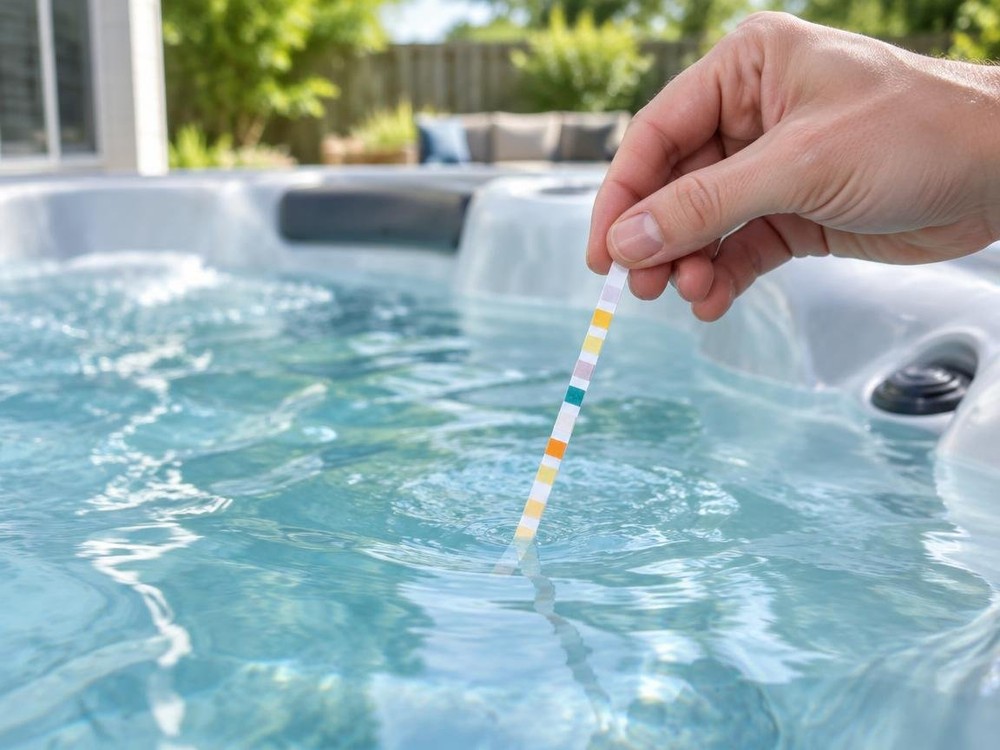
Types of Testing Methods:
Test Strips: These are the most common and convenient for routine testing. Simply dip a strip into the water (away from jets or skimmers), wait a specified time, and compare the color pads to the chart on the bottle. Test strips typically measure pH, total alkalinity, and sanitizer levels (chlorine or bromine).
- Best Practices: Store strips in a cool, dry place and keep the cap tightly sealed. Don’t touch the pads. Dip the strip mid-tub, not near the edges or jets. Read the results in natural sunlight within the recommended timeframe (usually 10-15 seconds) for accuracy. Never shake excess water off the strip.
Liquid Test Kits (e.g., FAS-DPD): These kits offer more precise readings and are excellent for monthly comprehensive checks or troubleshooting persistent issues. They involve adding drops of reagents to water samples and observing color changes.
- Best Practices: Follow instructions carefully, as different reagents test different parameters. These kits can often measure calcium hardness and cyanuric acid (CYA) more accurately than strips.
How Often Should You Test?
- Sanitizer & pH: Test daily, or at minimum, before each use, especially if the hot tub is used frequently or by multiple bathers. These parameters are the most volatile.
- Total Alkalinity & Calcium Hardness: Test weekly. These are more stable but still need regular monitoring.
- Cyanuric Acid (CYA) & Total Dissolved Solids (TDS): Test monthly or quarterly. CYA is only relevant for chlorine-sanitized outdoor tubs, and TDS indicates when a drain and refill is needed.
Chemical Wait Times and Circulation:
After adding any chemical, it’s crucial to allow adequate time for it to dissolve, disperse, and react with the water before retesting or re-entering the hot tub.
- General Adjustments (pH Increaser/Decreaser, Alkalinity Increaser, Calcium Hardness Increaser): After adding, run the jets for at least 15-20 minutes to circulate the chemical thoroughly. Then, wait another 15-20 minutes before retesting. This allows the chemical to fully integrate and ensures your retest provides an accurate reading of the new balance.
- Regular Sanitizer (Chlorine/Bromine Granules): Run jets for 15-20 minutes. You can usually re-enter once levels are in the safe range (3-5 ppm), but waiting 30 minutes for full dispersion is a good practice.
- Non-Chlorine Shock (MPS): Run jets for 15-20 minutes. You can typically re-enter after 15-20 minutes, provided your regular sanitizer levels are safe. Always leave the cover off during this time to allow any gases to vent.
- Chlorine Shock (Dichlor): Run jets for 15-20 minutes, then leave the cover off for at least 20-30 minutes to allow off-gassing. You must wait until the free chlorine level drops to 5 ppm or below before re-entering. This can take several hours, or even up to 24 hours, depending on the dose and water conditions.
Patience is a virtue in hot tub chemistry. Rushing the process by retesting too soon or entering the tub before chemicals have fully dispersed can lead to inaccurate readings, over-dosing, or uncomfortable and potentially unsafe soaks.
Knowing When It Is Safe to Soak
The ultimate goal of all your hot tub chemistry efforts is to provide a safe, comfortable, and enjoyable soaking experience. Knowing precisely when it’s safe to enter your hot tub after adding chemicals is paramount for your health and well-being.
Here’s our guide to soak safety after chemical additions:
- After pH, Total Alkalinity, or Calcium Hardness Adjustments:Once you’ve added these balancing chemicals, ensure your hot tub’s jets have run for at least 15-20 minutes to thoroughly circulate and dissolve the product.
- After this circulation period, wait another 15-20 minutes for the water to settle and the chemical to fully react.
- Then, retest your water. If all parameters (especially pH and sanitizer) are within their ideal ranges, it is generally safe to enter. The chemicals themselves are designed to be safe at balanced concentrations.
- After Regular Sanitizer Dosing (Chlorine or Bromine Granules):Add your sanitizer with the jets running for 15-20 minutes.
- Retest to confirm your free chlorine or bromine levels are within the ideal 3-5 ppm range.
- While some products claim immediate re-entry, we recommend waiting at least 30 minutes after dosing to ensure complete dispersion and to avoid direct contact with concentrated chemicals.
- After Non-Chlorine Shock (MPS):Add MPS with jets running for 15-20 minutes.
- Leave the hot tub cover off during this time to allow for ventilation.
- One of the key benefits of MPS is its quick re-entry time. After 15-20 minutes of circulation and ventilation, and assuming your regular sanitizer levels are in range, it is typically safe to re-enter the hot tub.
- After Chlorine Shock (Dichlor Shock):This is the one time you must exercise significant caution and patience. Add dichlor shock with jets running for 15-20 minutes, then leave the cover off for at least 20-30 minutes for ventilation.
- Crucially, you must wait until your free chlorine level drops to 5 ppm or below before entering. Entering a hot tub with very high chlorine levels (e.g., 10+ ppm) can cause severe skin and eye irritation, respiratory discomfort, and even damage to swimwear. This waiting period can range from a few hours to a full 24 hours, depending on the initial dosage and how quickly the chlorine is consumed by contaminants. Always test your water before stepping in.
Why the wait? The waiting periods ensure that chemicals are fully dissolved and dispersed throughout the water, preventing concentrated pockets that could irritate skin or eyes. For sanitizers, it also allows time for the levels to stabilize and for any initial off-gassing to occur. Prioritizing these wait times and always testing before entry will guarantee a comfortable and safe hot tub experience every time.
Troubleshooting Common Hot Tub Water Chemistry Problems
Even with a consistent routine, hot tub water can sometimes present challenges. Knowing how to diagnose and fix common problems will save you frustration and keep your spa ready for enjoyment.
Cloudy Water: This is perhaps the most frequent complaint and can have several causes:
- Low Sanitizer: Not enough chlorine or bromine to kill contaminants.
- Fix: Test sanitizer, shock the hot tub, then resume daily dosing.
- Unbalanced pH or TA: High pH or TA can make sanitizer less effective and cause particles to precipitate.
- Fix: Test and balance TA first, then pH.
- High Bather Load/Organic Contaminants: Too much sweat, oils, lotions, or detergents.
- Fix: Shock the hot tub, shower before soaking, clean filter.
- Dirty or Clogged Filter: Filter isn’t effectively removing particles.
- Fix: Remove, rinse, and chemically clean your filter.
- High Total Dissolved Solids (TDS): Water is “old” and saturated with chemicals and contaminants.
- Fix: Drain and refill the hot tub.
- Solution: Address the underlying cause. Often, a combination of shocking, balancing chemicals, and cleaning the filter will resolve cloudiness. If persistent, a drain and refill might be necessary.
Foaming Water: This is usually caused by organic buildup in the water.
- Causes: Body oils, lotions, cosmetics, hair products, laundry detergent residue on swimsuits, or even low calcium hardness.
- Fix: Use a defoamer for immediate relief (but this is a temporary fix). The long-term solution involves showering before entry, rinsing swimsuits, shocking the water to break down organics, and ensuring calcium hardness is in range. If persistent, a drain and refill is the best solution.
Skin or Eye Irritation:
- Causes: Unbalanced pH (too low or too high), or high levels of combined chlorine/bromine (chloramines/bromamines).
- Fix: Test pH and balance it to 7.4-7.6. Shock the hot tub to break down chloramines/bromamines. If using chlorine, ensure CYA levels aren’t too high.
Scale Buildup (Rough, White Deposits):
- Causes: High calcium hardness, combined with high pH and/or high total alkalinity. Hard water minerals precipitate out of solution.
- Fix: Lower pH and TA if they are high. For very high calcium hardness, there’s no chemical to lower it; you’ll need to partially or fully drain and refill with softer water, or use a hose pre-filter during refills. Use a scale inhibitor product as a preventative measure.
Corrosion (Pitting on Heater, Metal Fixtures):
- Causes: Low pH, low total alkalinity, or low calcium hardness. Water becomes corrosive and seeks minerals from your equipment.
- Fix: Test and raise pH, TA, and CH to their ideal ranges.
Strong Chemical Odor (often mistaken for “too much chlorine”):
- Causes: High levels of combined chlorine (chloramines), which are formed when free chlorine combines with bather waste. These are actually spent chlorine and cause the strong smell and irritation.
- Fix: Shock the hot tub with chlorine shock to break down the chloramines. This paradoxically eliminates the “chlorine smell.”
By systematically testing your water and addressing these common issues with the correct chemical adjustments and maintenance practices, you can quickly restore your hot tub to its pristine condition.
Routine Drain, Flush, and Refill Protocols
Even with diligent chemical maintenance, your hot tub water eventually reaches a point where it needs to be completely replaced. This routine drain, flush, and refill is a non-negotiable part of hot tub ownership, crucial for long-term water quality, bather comfort, and equipment longevity.
Why is it necessary?
- Total Dissolved Solids (TDS) Buildup: Over time, every chemical you add, every bather that enters, and every contaminant that dissolves contributes to the TDS level. When TDS exceeds 1,500 ppm (or a maximum of 2,500 ppm), your water becomes “old” or “saturated.” This can lead to cloudy water, reduced sanitizer effectiveness, foaming, and general difficulty in balancing chemicals. No amount of chemical adjustment can fix high TDS; only fresh water can.
- Cyanuric Acid (CYA) Accumulation: If you use granular chlorine (dichlor), it contains CYA to stabilize chlorine against UV rays. While helpful outdoors, in covered hot tubs, CYA continuously builds up. High CYA (above 50 ppm) can “lock up” your free chlorine, rendering it ineffective, even if your test strip shows adequate levels. CYA cannot be chemically removed, only diluted by draining.
- Chemical Byproducts & Biofilm: Despite sanitizers, organic byproducts and microscopic biofilm can accumulate in the plumbing lines over time. This creates a breeding ground for bacteria and can make it challenging to maintain clean water.
- Water Freshness: Fresh water simply balances more easily and feels better.
How often should you drain and refill?
A general guideline is every 3 to 4 months for moderate residential use. However, this frequency can vary based on several factors:
- Bather Load: Hot tubs with frequent use or many bathers will need more frequent draining. A common formula to calculate drain intervals is: (1/3 of total gallons) ÷ (average daily 20-minute users) = days between complete draining. For example, a 450-gallon spa used by 5 daily bathers would need draining approximately every 30 days ( (450/3) / 5 = 30).
- Water Quality Issues: If you’re constantly battling cloudy water, persistent foam, or difficulty maintaining sanitizer levels despite correct chemical additions, it’s a strong indicator that your water is “old” and needs to be replaced, regardless of how long it’s been.
- CYA Levels: For chlorine users, monthly CYA testing can dictate an earlier drain if levels climb too high.
The Drain, Flush, and Refill Process:
- Plumbing Flush (Optional but Recommended): Before draining, consider using a “spa flush” or “pipe cleaner” product. These chemicals circulate through the plumbing lines, breaking down biofilm and gunk that accumulates in hard-to-reach areas. Follow product instructions, typically running the jets for a period before draining.
- Drain the Hot Tub: Turn off the power to your hot tub. Locate the drain valve (usually at the bottom) and attach a garden hose to direct the water away from your foundation.
- Clean the Shell and Filters: Once drained, clean the interior shell with a non-abrasive spa cleaner. Remove your filters and clean them thoroughly, soaking them in a chemical filter cleaner if necessary.
- Refill with Fresh Water: Place your garden hose into the filter compartment (this helps prevent airlocks in the plumbing). Consider using a hose pre-filter, especially if you have hard water, to reduce mineral content from the start.
- Initial Chemical Balance: Once filled, turn the power back on and allow the water to heat up. Once at temperature, perform your initial water test and balance the chemicals in the correct sequence: Total Alkalinity, then pH, then Calcium Hardness, and finally, add your sanitizer and a shock dose.
By adhering to a regular drain, flush, and refill schedule, you ensure that your hot tub always starts with a clean slate, making chemical maintenance easier, more effective, and ultimately, your soaking experience more enjoyable.
Frequently Asked Questions About Hot Tub Water Chemistry
We’ve covered a lot of ground, but new hot tub owners often have specific questions that pop up. Here are some of the most common inquiries we receive about hot tub water chemistry:
Why does hot tub pH rise continuously?
This is one of the most common and frustrating phenomena for hot tub owners. The continuous rise in pH is primarily due to several factors unique to hot tubs:
- Aeration and Jet Turbulence: The constant bubbling and jet action in a hot tub causes carbon dioxide (CO2) dissolved in the water to “off-gas” or escape into the atmosphere. CO2 is acidic, so as it leaves the water, the water’s pH naturally increases. This is a fundamental chemical principle.
- Bather Activity: When people use the hot tub, they introduce sweat, body oils, and other organic matter, which are generally alkaline. This contributes to the overall alkaline drift.
- Sanitizer Products: Some sanitizers, particularly granular chlorine (dichlor), can have an impact on pH, although dichlor is generally considered pH neutral. However, the byproducts of sanitization can influence the water’s buffering capacity.
- Alkaline Drift: Over time, the natural tendency of hot tub water is to become more alkaline. This is why you’ll often find yourself adding pH decreaser more frequently than pH increaser.
To combat this, ensure your total alkalinity is in the ideal range (80-120 ppm), as it acts as a buffer to resist pH changes. You’ll likely need to regularly add pH decreaser (sodium bisulfate) to keep your pH in check.
Can you use swimming pool chemicals in a hot tub?
Generally, we do not recommend using swimming pool chemicals directly in a hot tub as direct replacements. While some basic chemicals like baking soda (for alkalinity) or muriatic acid (for pH decrease, with extreme caution) are chemically the same, most pool-specific products are formulated for vastly different water volumes and conditions.
Here’s why:
- Concentration Differences: Pool chemicals are designed for thousands of gallons of water. Using them in a 300-500 gallon hot tub means they are far too concentrated. Even a small amount can drastically over-dose your spa, leading to severe imbalances, irritation, and potential damage.
- Trichlor Tablets: Pool trichlor tablets are a prime example of what not to use in a hot tub. They are highly acidic, which would aggressively lower your hot tub’s pH. More importantly, they contain a very high percentage of cyanuric acid (CYA). In a small hot tub volume, CYA would build up extremely rapidly, making your chlorine ineffective and requiring frequent draining.
- Volume Ratio: The chemical demand and reaction rates in a hot tub are much higher due to heat and bather load. Pool chemicals are not designed for this accelerated environment.
- Surface Damage: Some pool chemicals or their byproducts, when concentrated, can stain or etch the acrylic surface of your hot tub.
Always purchase chemicals specifically labeled “for hot tubs” or “for spas.” These products are formulated with the correct concentrations and ingredients suitable for the unique environment of your hot tub.
What is the formula for calculating hot tub drain intervals?
Determining how often to drain and refill your hot tub is crucial for maintaining water quality and avoiding issues related to high Total Dissolved Solids (TDS) and chemical saturation. A useful rule of thumb, especially for those with varying bather loads, is based on the hot tub’s volume and usage.
The formula is:
(1/3 of your hot tub’s total gallons) ÷ (average number of daily 20-minute users) = Number of days between complete draining
Let’s break this down:
- 1/3 of your hot tub’s total gallons: This represents the “effective” volume of water that is actively being used and contaminated. For example, if you have a 450-gallon hot tub, one-third would be 150 gallons.
- Average number of daily 20-minute users: This accounts for the bather load. If multiple people use the tub, or one person uses it multiple times a day, count that as multiple “user” instances. For example, if two people soak for 20 minutes each, that’s two users. If one person soaks for 40 minutes, that’s also two users.
- Number of days between complete draining: The result tells you approximately how many days you can go before a full drain and refill is recommended.
Example: If you have a 400-gallon hot tub and it’s used by an average of 2 people for 20 minutes each day: (400 gallons / 3) ÷ 2 users = 133.33 ÷ 2 = 66.67 days So, you would aim to drain and refill your hot tub approximately every 60-70 days (roughly every 2 to 2.5 months).
For lighter use (e.g., one person a few times a week), you might extend this to 3-4 months. For very heavy use (e.g., daily use by multiple people, or a rental property), you might need to drain monthly. This formula provides a more personalized guideline than a generic “every 3 months” recommendation.
Conclusion
Maintaining your hot tub’s water chemistry might seem like a daunting task at first, but with the right knowledge and a consistent routine, it becomes a straightforward part of enjoying your spa. We’ve explored the essential parameters, the critical order of chemical addition, and the unique challenges hot tubs present compared to swimming pools.
The goal is always safe, clean, and balanced water. This is achieved through regular testing, understanding the function of each chemical, and following the correct sequencing for adjustments. By embracing these practices, you’ll protect your hot tub’s equipment, ensure bather comfort, and most importantly, guarantee that your spa remains the relaxing oasis you envisioned. Here’s to many years of blissful, worry-free soaking!