A family-friendly floor has to do more than look good on installation day. It needs to handle breakfast spills, wet shoes, rolling chairs, energetic pets, dropped toys, and the regular cleaning that comes with a busy household. Working with a knowledgeable hardwood flooring contractor can help homeowners understand how a surface will perform in the rooms where daily life is most demanding. A contractor can also identify issues that are not always visible when comparing samples, such as subfloor preparation, doorway transitions, moisture conditions, and the need for expansion space around certain flooring products.
The best choice is rarely one material for every room. A kitchen, bedroom, entryway, and laundry room face different kinds of traffic and moisture. By looking beyond color, grain pattern, or trend, families can select flooring that supports comfort, cleaning, safety, and long-term maintenance. Thinking through the household’s routines before installation can prevent a floor from becoming a source of unnecessary upkeep later. For example, a family that regularly enters through a garage may need more protection near that door than near a formal front entry that is used only occasionally.
Start With The Daily Demands Of Your Home
Begin with how each space is actually used. Notice where grit collects, where water is tracked in, where chairs move repeatedly, and where pets rest or children play. A quiet bedroom may benefit most from warmth and sound control, while an entryway needs a surface that can tolerate frequent cleanup. Wear patterns often reveal more about the right material than a showroom display does.
It is also useful to consider the people using the space. Toddlers may spend substantial time crawling or playing on the floor, older children may bring in sports equipment or art supplies, and adults may need a surface that feels comfortable during long periods of cooking or standing. Think about seasonal changes as well. Rain, snow, garden soil, and road salt can create maintenance demands different from those of dry-weather foot traffic. A flooring decision should account for the busiest days of the year, not only the conditions in a tidy home during a showroom visit.
Compare The Flooring Factors That Matter Most
Use the same practical questions for every flooring sample under consideration:
- Moisture resistance: Can the surface withstand splashes, damp shoes, and quick cleanup without damage?
- Scratch resistance: How will it respond to grit, pet claws, toys, and chair legs?
- Cleaning needs: Can routine messes be handled with tools and cleaners your household will realistically use?
- Comfort and noise: Is the floor comfortable for standing, sitting, crawling, and playing, and will it amplify footsteps?
- Repairability: Can a worn or damaged section be replaced, recoated, or refinished?
- Service life: Will the floor still make sense if children grow, pets are added, or room functions change?
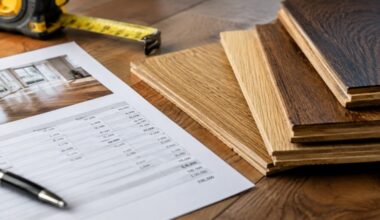
Bring samples home whenever possible and view them in the room where they may be installed. Look at them in morning light, evening light, and artificial light, because undertones can appear very different throughout the day. Place samples beside wall paint, cabinetry, upholstery, and trim rather than evaluating them alone. It can also help to ask how the material should be cleaned, what types of pads or mats are safe to use, and whether direct sunlight may affect the finish over time.
Match Flooring To Each Room
Entryways And Mudrooms
These areas are exposed to water, mud, salt, and abrasive grit. Choose a surface suited to frequent wiping, then support it with absorbent mats, a shoe-storage routine, and a clear path that keeps wet items away from the main living areas. Wet floors also require attention to traction.
Use a mat both outside and inside the entrance when space allows, but make sure the edges lie flat so the mats do not become a trip hazard. A designated place for umbrellas, boots, backpacks, and pet towels can also reduce the amount of moisture that travels farther into the home. Check mats periodically, since saturated or worn mats cannot protect the floor as effectively.
Kitchens And Dining Areas
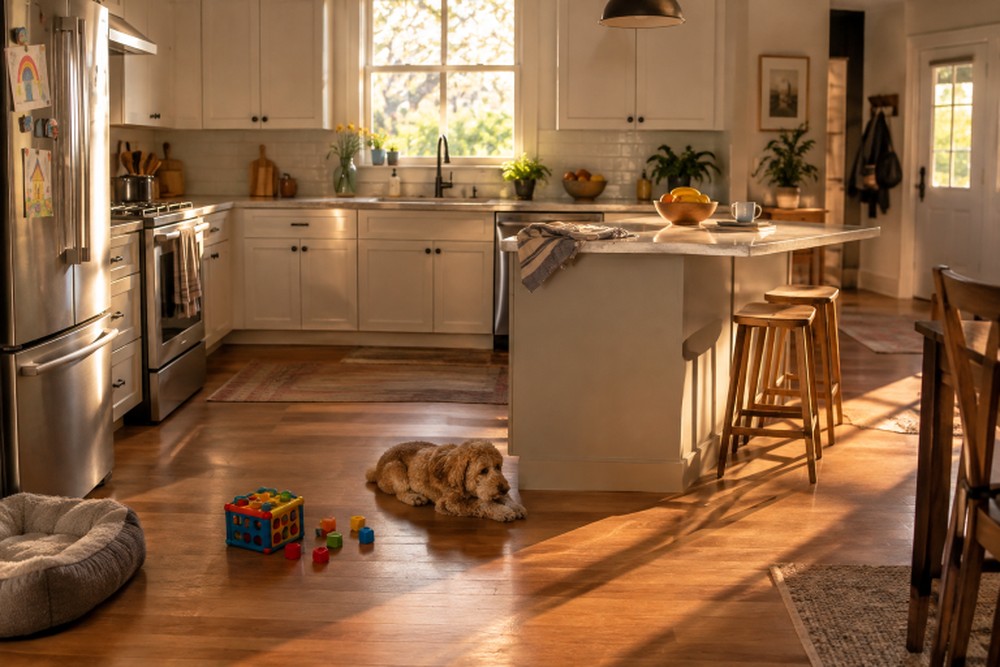
Food spills, dropped dishes, chair movement, and extended standing are everyday concerns here. Balance cleanability with comfort underfoot, and view samples beside cabinets and appliances at different times of day. Natural and artificial light can change how a color or texture appears.
Consider the areas directly around the sink, refrigerator, dishwasher, and dining table, where small spills are especially likely. Chair pads or felt protectors can reduce wear from repeated movement, while a runner or cushioned mat may make food-preparation zones more comfortable. Any rug used in these spaces should be easy to clean and should not slide across the floor.
Living Rooms, Bedrooms, And Playrooms
Family rooms need flexibility for furniture, pets, and play. Mid-range colors and subtle visual variation can make ordinary dust and minor marks less obvious than very light or very dark surfaces. Bedrooms and playrooms may place greater value on warmth, quieter footsteps, and easy spot cleaning. Washable rugs can define play areas, but they should lie flat and stay secure.
Furniture layout matters in these rooms. Movable pieces, toy storage, and seating can concentrate pressure and scuffs in a few locations, so use protective pads beneath legs and avoid dragging heavy furniture directly across the surface. If a playroom will later become an office, guest room, or study area, choosing a durable, adaptable floor can help the room change functions without requiring another major update.
Bathrooms, Laundry Rooms, And Basements
In moisture-prone rooms, prioritize water resistance, dependable traction, and prompt attention to leaks. The National Center for Healthy Housing advises against wall-to-wall carpeting in bathrooms, kitchens, laundry rooms, basements, and other spaces where moisture can be a problem, noting that hard flooring with nonskid features is a better fit in those areas. Moisture-prone rooms need water-resistant floors and nonskid features to support safer, easier care.
Before installing flooring in a basement or other below-grade area, address signs of existing moisture, such as dampness, odors, staining, or recurring condensation. In laundry rooms, inspect appliance connections and use drip pans or other appropriate safeguards where needed. Flooring can make cleanup easier, but it cannot replace timely repair of a leak or proper moisture control in the room.
Plan For Kids, Pets, And Heavy Traffic
No floor is completely immune to scratching, staining, impact, or moisture. The goal is to identify the most likely type of wear in your home and reduce avoidable damage. Grit can act like sandpaper under shoes, a dropped object can chip a hard surface, and repeated chair movement can gradually wear one small area.
Simple habits help. Use felt pads under furniture, add protective mats where chairs roll, trim pet nails, sweep or vacuum grit regularly, and clean spills promptly. These practices matter because even a durable material can be damaged when dirt and moisture are left in place.
Families should also plan for realistic accidents rather than expecting perfect behavior from children or pets. Keep a small cleanup kit accessible for spills, including a soft cloth and the cleaner recommended for the floor. When choosing a pattern or finish, remember that a little natural variation can make everyday signs of use less visually prominent. This does not eliminate maintenance, but it can make the home feel easier to live in between routine cleaning sessions.
Build A Simple Cleaning Routine
- Remove crumbs and grit with a soft broom, dust mop, or flooring-appropriate vacuum.
- Wipe up spills as they happen rather than letting moisture sit.
- Use products approved for the specific flooring material and finish.
- Avoid excess water unless the manufacturer specifically permits wet cleaning.
- Inspect furniture pads, rugs, and transition areas periodically.
- Store cleaning products safely and follow their label directions.
A cleaning routine works best when it matches the household’s schedule. High-traffic areas may need quick attention several times a week, while less-used rooms may need less frequent care. Avoid abrasive scrubbers, steam, waxes, or homemade cleaning mixtures unless the flooring manufacturer specifically approves them. Using an unsuitable product can leave residue, dull a finish, or create a surface that is harder to clean over time.
Consider Comfort, Grip, And Indoor Air Quality
Flooring affects how people move through a home. Very smooth surfaces can become slippery when wet, while overly thick or curled rugs can create a tripping hazard. Keep walkways clear, use non-slip rug pads, and replace mats that no longer lie flat.
Material selection also includes finishes, adhesives, and ventilation during installation. Flooring, coatings, and adhesives can release volatile organic compounds, so follow product instructions and provide fresh air when appropriate. The U.S. Environmental Protection Agency explains that increasing ventilation when using products that emit VOCs can help reduce exposure.
Comfort is not only about softness. It can include temperature, noise, and the ease of moving safely between rooms. Pay attention to changes in floor height at doorways and between different materials, particularly in homes with young children, older adults, or people using mobility aids. Clear transitions and securely installed flooring help reduce avoidable hazards.
Avoid Common Flooring Mistakes
- Choosing only by appearance rather than room conditions.
- Assuming every wood-look product handles moisture the same way.
- Using one material throughout the house without considering wet areas.
- Ignoring subfloor conditions, existing moisture, and transitions.
- Using harsh cleaners that are not recommended for the finish.
- Skipping sample testing in the actual room and lighting.
- Assuming a higher price automatically means better family performance.
- Forgetting to review warranty terms, installation requirements, and recommended maintenance before making a final selection.
- Choosing rugs, mats, or furniture protectors without confirming that they are compatible with the flooring finish.
Use A Practical Flooring Checklist
- What messes occur most often in this room?
- How much water, mud, or grit reaches the space?
- Will children or pets spend significant time on the floor?
- How often can the floor realistically be cleaned?
- Does the room need quieter, softer footing?
- Can small damaged areas be repaired or replaced?
- Does the product suit the home’s moisture and ventilation conditions?
- What preparation does the subfloor require before installation?
- Are the cleaning tools, approved products, and routine maintenance practical for the household?
- Will the color, texture, and finish still work if the room’s use changes in the future?
Choose A Floor That Fits Real Life
The strongest flooring choice is not necessarily the most expensive or the most fashionable. It is the option that balances durability, comfort, cleaning effort, safety, appearance, and repair needs for the way your household lives now. A room-by-room comparison helps families choose surfaces that continue to perform well long after installation is complete.
Taking time to compare real-life needs with product requirements can lead to a more confident decision. The right floor should support everyday routines without requiring unrealistic care, while still fitting the style and function of each space. With practical planning, suitable materials, and consistent maintenance, a family-friendly floor can remain useful and attractive through changing seasons, changing schedules, and changing household needs.