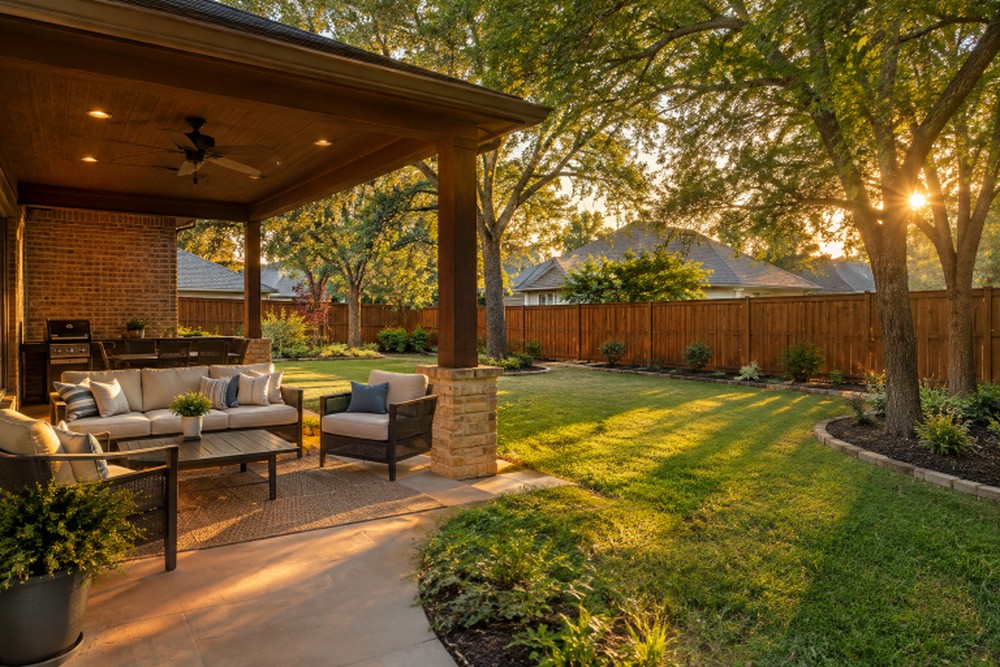
Planning a backyard in Dallas-Fort Worth means designing for more than appearance. Strong sun, sudden downpours, changing temperatures, active households, and uneven lots can all affect how well an outdoor space performs over time. A thoughtful outdoor living plan brings fencing, shade, drainage, surfaces, and gathering areas together so the finished yard works for everyday life.
Whether you live in Dallas, Arlington, Fort Worth, Frisco, McKinney, Mesquite, Plano, or Rockwall, the best approach begins with how you actually use your property. A practical design can support family meals, pets, gardening, relaxing, entertaining, and privacy without turning the yard into a high-maintenance project.
1. Start With A Clear Backyard Plan
Before selecting fence styles, patio materials, or plants, take time to understand the site. Make a simple sketch that includes the home, doors, windows, mature trees, utility locations, slopes, fence lines, and areas where water collects. Then list the priorities for the yard. Some homeowners need more privacy, while others need a covered patio, a safer dog run, a larger entertaining area, or a path that makes the whole yard easier to access.
A clear plan prevents features from competing for the same space. It also helps homeowners complete work in sensible stages. For example, drainage and structural work should normally come before decorative planting or furniture.
2. Plan Around North Texas Weather
North Texas backyards need to handle lengthy periods of direct sun, wind, rain, humidity, dry spells, and occasional freezing weather. Materials should be chosen for those conditions rather than only for their appearance on installation day. Durable posts, properly installed footings, weather-resistant hardware, and finishes that can be cleaned or renewed all support a longer-lasting result.
Furniture and fabrics also deserve attention. Look for pieces made for outdoor exposure, and consider where cushions, grills, and accessories can be stored during severe weather. A strong fence, covered patio, or gate system should be planned as part of the entire property, not as an isolated feature.
3. Choose The Right Level Of Privacy
Privacy does not always mean surrounding the entire yard with a solid barrier. A tall wooden fence can create separation along busy streets or between neighboring lots, while wrought-iron fencing can preserve views and allow airflow. Chain link fencing may be a practical choice for larger areas, pet enclosures, or portions of a property where visibility matters.
Decorative screens, planting beds, and carefully placed gates can add privacy around a patio without making the whole yard feel closed in. Before construction begins, confirm property lines and review any applicable neighborhood, city, or utility requirements.
4. Create Shade Where People Will Use It
Shade is most valuable when it protects the places people naturally gather. Observe the backyard in the morning, midday, and late afternoon before deciding where to place a covered patio, pergola, umbrella, or seating area. A shaded dining space near the kitchen door is often more useful than a structure at the far end of the lot.
When adding shade, consider roof lines, overhead wires, existing trees, root zones, and future plant growth. Covered patios can provide dependable protection, while umbrellas and movable furniture offer flexibility for smaller seating areas.
5. Solve Drainage Before Adding Hardscapes
Drainage should be evaluated before installing patios, decks, retaining walls, or flower beds. Standing water, muddy fence lines, eroded soil, exposed roots, and water moving toward the house are all signs that the yard may need attention. Changing a surface without considering water flow can move the problem to another part of the property.
Depending on the site, solutions may include grading, swales, downspout extensions, drains, permeable materials, or planted areas that slow runoff. The EPA explains that rain gardens collect rainwater and allow it to soak into the ground, which can be useful when incorporated into an overall drainage strategy.
6. Compare Surfaces And Materials
Every surface involves a balance between appearance, comfort, maintenance, and budget. Consider how the area will be used during hot weather, after rain, and throughout the year.
- Concrete: Durable and adaptable for patios and walkways, but it needs proper base preparation and drainage.
- Wood decking: Offers a warm, natural appearance but requires periodic cleaning and finish care.
- Composite decking: Can reduce routine finish maintenance, though color and surface heat should be considered.
- Gravel: Can support drainage and define informal paths, but it may shift and need replenishing.
- Pavers: Create a finished look and can be repaired in sections when installed on a stable base.
7. Divide The Yard Into Useful Zones
A backyard often feels more functional when it is divided into clear activity areas. A dining space can be placed near the back door, a lounge can be set up under cover, and an open portion of the yard can remain available for children, pets, or games. Cooking stations, gardens, storage areas, and fire features also need adequate clearance and convenient access.
Paths, changes in surface material, low retaining walls, flower beds, and lighting can define these zones without crowding the property. Good circulation is especially important around gates, grilling areas, and outdoor seating.
8. Reduce Long-Term Maintenance
The most successful outdoor spaces fit the homeowner’s available time for upkeep. Choose plants that suit the local climate, use mulch to help protect soil and limit weeds, and group plants with similar watering needs. Texas A&M AgriLife Extension notes that water-efficient landscape planning includes soil preparation, plant selection, watering, and maintenance.
Leave access around gates, drainage routes, equipment, and exterior fixtures. Fence staining, deck care, and routine inspections are easier when the design provides room to work.
9. Build A Realistic Project Budget
A reliable budget accounts for the work below and behind the finished surface. Include site preparation, removal of old materials, drainage improvements, posts, footings, hardware, electrical needs, lighting, irrigation adjustments, and potential approval costs. Keeping a reserve for unexpected site conditions or weather delays can help a project stay on track.
10. Use A Simple Planning Checklist
- Watch the yard during sun, shade, and rain.
- Confirm property lines and any relevant restrictions.
- Address drainage before selecting patio or deck materials.
- Identify the areas that need privacy and secure access.
- Place shade near the spaces used most often.
- Choose materials based on heat, moisture, upkeep, and daily use.
- Request detailed estimates for structural and finish work.
- Review the design from indoors as well as from the yard.
Final Thoughts
A well-planned Dallas-Fort Worth backyard should be comfortable, durable, and easy to use. By solving drainage early, placing shade with purpose, choosing the appropriate fencing and materials, and planning for realistic maintenance, homeowners can create an outdoor space that supports daily life for years to come.