Public benches, restroom fixtures, signs, utility covers, and transit equipment all rely on small pieces of hardware that are easy to overlook. A standard screw can often be removed with a common tool, which can turn a minor nuisance into missing parts, loose panels, exposed wiring, or an unnecessary repair call. Suppliers such as https://bestsecurityscrews.com/ offer specialized options designed to make unauthorized removal more difficult.
Choosing the right fastener is not simply a matter of selecting the most unusual screw head. The best choice balances deterrence, corrosion resistance, structural strength, installation conditions, and future service access. A permanent sign panel may need a very different solution than a camera cover or an access panel that technicians must open regularly.
Why Fasteners Matter In Shared Spaces
In shared environments, ordinary hardware can be an easy target for curiosity, theft, or intentional damage. A loosened sign can develop sharp edges. A missing restroom partition screw can make a fixture unstable. A removed cover can expose electrical components or mechanical parts. Even when damage is minor, staff time, replacement hardware, and service interruptions add up quickly.
Tamper resistance is best understood as a deterrent rather than a guarantee. It slows down casual interference by requiring a less common tool, more time, or a more deliberate removal method. That added difficulty can discourage opportunistic damage while helping maintenance teams control access to vulnerable equipment.
Common Security Levels And Drive Styles
Fasteners should match the level of risk rather than follow a one-size-fits-all rule. The broad range of common and security patterns shown in this list of screw drives illustrates why drive style affects both security and maintenance planning.
- Pin-in-hex and pin-in-star:These use a center pin that prevents a standard hex or star bit from engaging. They work well for moderate deterrence where authorized removal is still expected.
- Spanner, tri-wing, and tri-groove:These less-common drives can limit removal by people using ordinary hand tools. They are useful on fixtures, panels, and hardware exposed to the public.
- One-way fasteners:These can be tightened with a conventional tool but resist normal reverse turning. They suit signs, permanent panels, and fixtures that rarely require service.
- Breakaway or shear-head fasteners:The installation head separates once the proper torque is reached, leaving a smooth surface that is difficult to grip. They are best reserved for applications where later removal is not expected.
- Custom-keyed fasteners:Proprietary drive patterns can restrict access to approved maintenance teams. They require careful key control, tool storage, and replacement planning.
Where Tamper-Resistant Fasteners Are Used
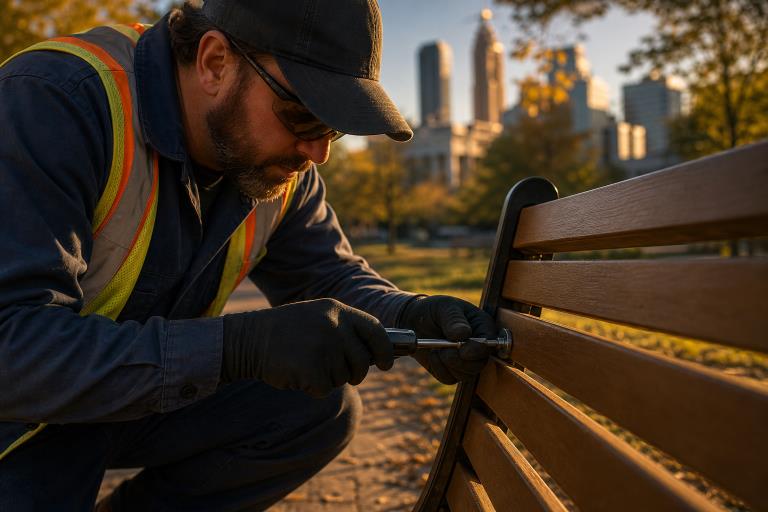
Security hardware is used wherever a component is valuable, safety-sensitive, or repeatedly exposed to the public. Outdoor furniture and street fixtures may use it on benches, picnic tables, bollards, waste bins, recycling stations, and information boards. Transit and parking areas may need it for bus shelters, ticket machines, payment equipment, railings, protective covers, and seating.
Schools, parks, and recreation facilities commonly use tamper-resistant fasteners on playground parts, sports equipment, handrails, ramps, lighting housings, and utility panels. Commercial and institutional properties may apply them to restroom hardware, security cameras, display cases, wall-mounted devices, and access covers.
Factors To Review Before Choosing
Location And Exposure
Start with the environment. Indoor hardware may be exposed to cleaning chemicals and humidity, while outdoor hardware can be exposed to rain, temperature fluctuations, road spray, dirt, or salt air. Select the material and finish for the actual conditions. A strong drive style is not enough if the fastener corrodes, stains surrounding surfaces, or seizes before scheduled maintenance.
Load, Security, And Maintenance
Separate decorative panels from components that carry weight, resist movement, or protect hazardous equipment. Review diameter, thread type, length, head shape, washer requirements, material strength, and the base material. When failure could cause injury, use an engineer or qualified installer to confirm the fastening method.
Also, ask how often the item needs inspection or repair. A basic pin-drive may be appropriate for low-risk access panels. One-way or breakaway options may be suitable for permanent installations. Custom tooling can help standardize access control across multiple locations, but only if authorized staff can obtain the tools quickly when needed.
Installation And Maintenance Steps
- Inspect the mounting surface.Repair damaged threads, cracks, misaligned holes, or weakened backing material before installation.
- Confirm the correct size.Avoid excessive screw length that could contact wiring, pipes, or moving components.
- Use the matching driver.An incorrect bit can damage the recess and make legitimate service difficult.
- Apply proper torque.Over-tightening can strip threads, deform panels, or damage brittle materials.
- Document the hardware.Record the type, size, location, required tool, and replacement source in the maintenance plan.
- Inspect regularly.Check for corrosion, loosening, stripped heads, cracks, and evidence of forced entry.
Regular checks support the broader protection of shared spaces. The National Park Service’s discussion of vandalism also highlights how damage can affect the visitor experience and lead to avoidable restoration costs.
Common Selection Mistakes
- Choosing a security drive based only on appearance.
- Assuming all security screws provide the same level of resistance.
- Ignoring corrosion risks in outdoor, coastal, or chemical-exposure areas.
- Using a permanent fastener where regular service is likely.
- Failing to label, secure, and replace the required driver tools.
- Skipping a trial installation before placing a large order.
- Relying on fasteners alone instead of using a wider physical security plan.
Cost, Repairs, And Long-Term Value
Purchase price is only one part of the decision. Compare it with labor, replacement parts, repeated service calls, downtime, and the cost of unsafe or damaged fixtures. A higher-cost fastener may be worthwhile in locations with frequent vandalism or difficult access. Standardizing a limited set of approved fasteners across a site can also simplify training, inventory, and emergency repairs.
Frequently Asked Questions
Are Tamper-Resistant Fasteners Completely Tamper-Proof?
No. They are intended to slow access, deter casual interference, and control routine maintenance access. A determined attacker with enough time and tools may still remove mechanical hardware.
Which Type Is Best For Outdoor Use?
The best option depends on weather exposure, corrosion risk, load requirements, and whether removal will be needed later. Material and finish are just as important as the drive pattern.
Are One-Way Fasteners Right For Every Project?
No. They are useful for permanent installations, but they can complicate inspection, repair, and replacement work because removal may require drilling or cutting.
Final Thoughts
Choosing tamper-resistant fasteners is a practical design decision, not a simple product swap. Review the site, expected misuse, structural needs, environmental exposure, and service requirements before selecting hardware. With the right drive style, material, installation process, documentation, and inspections, property managers can reduce avoidable damage while keeping public spaces safe and functional.