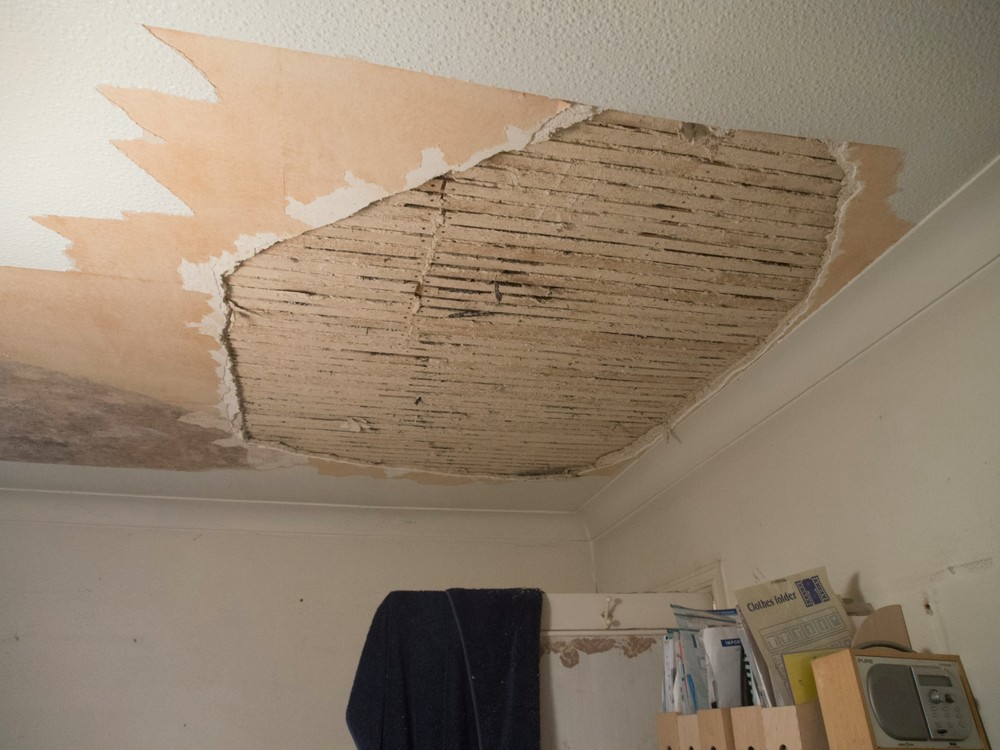
If you see an area of ceiling paint darken after repainting and then re-emerge after a couple of weeks, you may have a more serious moisture problem. Painting over this stain won’t stop water from coming through the roof, bathroom floor, or concrete slab into the ceiling. Instead, you’ll need to discover what’s allowing water to penetrate the building surfaces.
Why Ceiling Water Stains Keep Coming Back?
Frequent ceiling stains often mean water is still leaking into the area. The stain is merely one side effect of an issue that may be starting several feet higher.
Common causes include:
- Roof leak: Rain can leak through damaged roof sheets, missing or loose flashing, and old sealants.
- Bathroom leaks: Cracked tiles, broken grout, and leaking plumbing fittings will allow water to get into the ceiling below.
- Granular seepage: Unprotected slabs can take in water and pass it through.
Water may run along concrete, pipe, or structural joints before it leaks out as a stain. This means the visible spot is not a good way to find the leak.
What Happens When Buildings Lack Proper Waterproofing
Concrete may look solid, but it is not completely water-resistant. Pores, cracks, construction joints, and other gaps in the concrete can let water penetrate.
The repeated attack will be exacerbated if moisture is not correctly protected, and you may find yourself having to:
Paint and Ceiling Damage
Airborne water collects in the space above the ceiling, and damage may include paint: bubbling, yellowing, peeling, or discoloration. Extensive damage can weaken ceiling boards or cause them to fall away.
Mold and Indoor Moisture Problems
Continual dampness creates an environment conducive to mold growth, which can cause bad smells and often affects air quality, especially in poorly ventilated rooms.
Concrete Deterioration
Design for longevity and moisture protection. Water can cause concrete to deteriorate over time. If embedded steel is exposed to water, corrosion can occur, causing cracks and damage to the concrete.
How to Find and Fix the Source of a Recurring Leak
Before you fix a stained ceiling, find out where the water is coming from. Sealing up the spot will just hide the problem for now.
Follow these practical steps:
- Examine the space over the stain. Check nearby bathrooms, roof areas, balconies, plumbing lines, and concrete floors for any obvious signs of water.
- Determine the way water is getting in. An experienced waterproofing contractor can evaluate the issue and tell you whether you’re facing a plumbing problem, a crack, a joint, or insufficient surface protection.
- Correct the damage. Repair leaking pipes, deficient sealants, cracks, and damaged construction details before applying a new protective coating.
- Let the area dry. Make sure you’ve resolved the moisture source and that the materials to be repaired are dry.
- Re-establish the ceiling. Repair missing or damaged pieces, and paint only after you’ve addressed the underlying issue.
One key element of building protection is a waterproofing membrane. This protective layer is applied to appropriate surfaces to minimize or stop water from penetrating.
Wrapping Up
Persistent ceiling stain. If you find yourself constantly covering up the same stain on your ceiling, it could mean moisture is still making its way into your building through a vulnerable or neglected opening. Before you keep throwing money at the problem, find the cause and choose the right waterproofing and protection system. Ask a reputable contractor to inspect your premises and recommend the best product and application. Early action will go a long way toward protecting your ceilings, concrete, and your building’s future.