Acoustic planning rarely makes it onto anyone’s priority list until something goes wrong. By then, the walls are up, the flooring is down, and fixing the problem costs three times what prevention would have. This article looks at what actually happens when sound is treated as an afterthought, from the first complaints to the final invoice.
The costs you see are easy enough to budget for. The ones you don’t see, the lost productivity, the health fallout, the legal exposure, tend to show up later and hit harder than anyone expected.
Why Acoustic Planning Gets Skipped and What It Costs You
Acoustics gets cut from early project conversations because it reads as decorative rather than functional. Clients and contractors alike tend to treat sound control the way they treat paint color: something to sort out near the end, once the “real” decisions are made. That thinking is exactly where the financial damage starts.
Specialists at Acoustical Surfaces recommend getting sound control into the project conversation at the same stage as structural and mechanical systems, not after finishes are being selected. By the time most clients start thinking about acoustics, the decisions that would have made the biggest difference are already locked in.
Budget structures reinforce this pattern. Line items for insulation, structural elements, and mechanical systems are approved with little debate, while sound control is folded into finishes or dropped entirely when costs run over. Nobody fights for it at the table because nobody’s been handed a number for what ignoring it will cost.
The assumption that acoustics can always be fixed later is also surprisingly durable, even among experienced builders. It persists because the consequences aren’t immediate. A space doesn’t reveal its acoustic problems until people are actually using it, at which point the project is closed and the remediation cost lands in a completely different budget conversation.
Productivity and Focus Take the First Hit
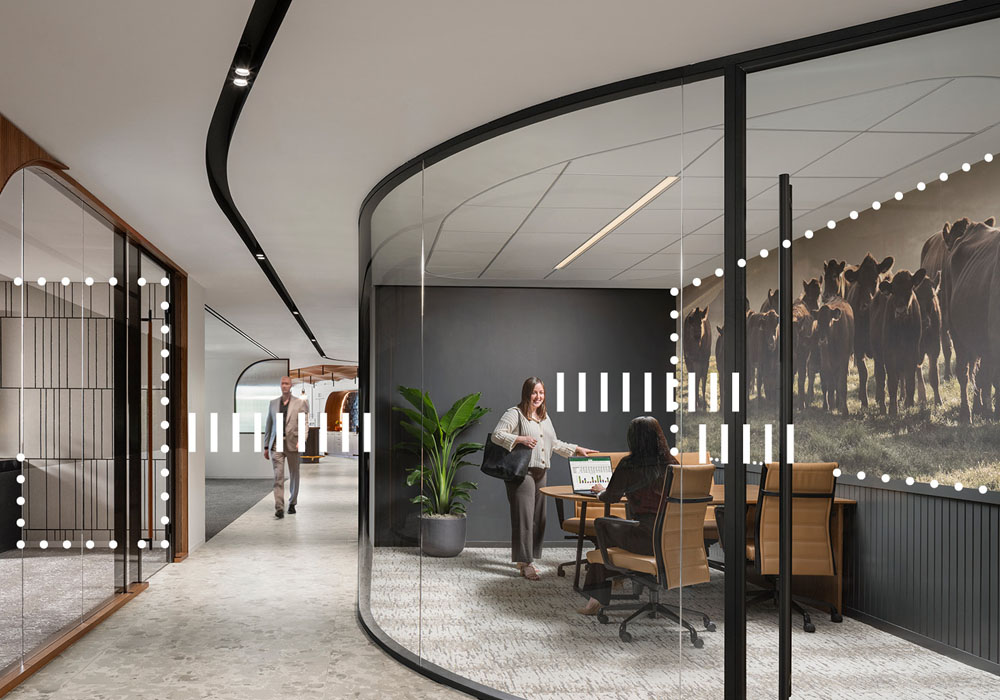
Open-plan offices with exposed concrete, glass, and hard flooring create a reverberant environment that forces the brain to work harder just to follow a conversation. Workers aren’t always aware of why they feel drained by midday, but the research is consistent: high background noise and poor speech intelligibility wear people down before lunch.
Speech clarity matters more than volume. You can turn down a speaker, but you can’t un-blur a room full of overlapping voices bouncing off parallel hard surfaces. When people can’t clearly understand what’s being said around them, cognitive load increases and the quality of focused work declines, whether someone is on a call, writing, or running numbers.
Fatigue from noisy environments also drives errors. Studies in office and healthcare settings have linked elevated ambient noise to measurable increases in mistakes, and the mechanism isn’t subtle. The brain allocates processing power to filtering out distractions, leaving less available for the actual task. You end up paying for noise in ways that never appear on an acoustic budget line.
Productivity losses compound silently over time. A team working 10 to 15 percent below capacity in a poorly designed space will rarely attribute that drop to acoustics. They’ll blame the workload, the tools, and the management. The acoustic problem just keeps running in the background, and the business absorbs the cost without ever identifying the source.
Health and Wellbeing Consequences Nobody Budgets For
Chronic noise exposure doesn’t just make people uncomfortable. It activates the body’s stress response, raising cortisol levels and keeping them elevated in ways that standard workplace wellness programs are completely unequipped to address. The staff at Acoustical Surfaces put it plainly: the single most underestimated factor in long-term occupant health is sustained exposure to noise levels that feel tolerable but never fully stop.
Residential builds carry their own version of this problem. Poor acoustic separation between floors, units, or mechanical systems means occupants deal with sleep disruption night after night. Sleep quality degrades before people consciously register the source, and the downstream effects, irritability, reduced immune function, and difficulty concentrating, accumulate over months before anyone connects them to the building itself.
Absenteeism tied to noise-related stress shows up in the data, but organizations rarely trace it back to the built environment. It gets categorized under general health costs and absorbed as a normal operating expense. The acoustic problem that created it never gets identified, and nothing changes in the space.
Employee turnover tells the same story. People leave environments that exhaust them, and they often can’t articulate exactly why. A poorly performing acoustic environment rarely makes it into an exit interview, but it contributes to the discomfort that pushes people toward the door. Replacing staff costs far more than treating walls ever would have.
Structural Remediation Is Exponentially More Expensive
Retrofitting acoustic treatment into a finished space is a different category of problem from planning it in at the start. You’re not adding something new; you’re working around everything that’s already there, which means concealment systems, specialized contractors, and disruption to an occupied building. The numbers climb fast.
HVAC duct noise is one of the most common post-occupancy complaints in commercial buildings, and it’s also one of the most expensive to fix after the fact. Planned acoustic lining, vibration isolation, and duct geometry decisions during design add modest cost. Addressing the same problems once the ceiling is closed means cutting into it, and that work typically runs three to five times the original cost.
Impact noise between floors requires subfloor access or a dropped-ceiling solution, both of which entail significant disruption and material costs. In occupied multifamily or mixed-use buildings, that disruption directly affects tenants, introducing compensation discussions and sometimes lease renegotiations on top of the construction bill.
Developers and landlords who absorb repeated tenant complaints about noise end up spending money in ways that don’t appear on any construction cost analysis: management time, legal review, rent concessions, and eventually vacancy if the reputation sticks. All of it traces back to decisions made, or skipped, during the design phase.
Final Thoughts
Poor acoustic planning is a cost that doesn’t announce itself upfront. It spans productivity losses, health expenses, remediation budgets, legal exposure, and, eventually, the reputation of the property itself. None of those costs appear on an acoustic line item because they were never treated as acoustic problems in the first place.
Getting acoustics into the early conversation is the only way to do this without costing more later. The materials, the consultants, the design decisions: they’re all cheaper at the start than they are after the fact. Every project that skips that step is just deferring a bill; it will eventually pay, with interest.