Most homeowners spend a lot of time thinking about paint colors, countertops, and cabinet hardware. Those choices are visible and fun to make. But the materials buried inside your walls, under your floors, and running through your ceilings are what actually determine whether a home holds up for 30 years or 80.
One manufacturing process quietly shapes the quality of nearly every structural and mechanical material in a home – heat treatment. It happens in industrial facilities, long before any material arrives on a job site. Steel gets heated to specific temperatures, held there, then cooled at controlled rates to change how the metal behaves. Wood undergoes a similar thermal process that alters its cellular structure. The result is a class of materials that’s harder, more ductile, less prone to cracking, and more resistant to the conditions homes deal with every single day.
You won’t see “heat-treated” stamped on the walls of a finished house. But if your home was built to any modern standard, this process is almost certainly in it. Here are seven places it shows up – and why each one matters.
1. Structural steel framing and beams
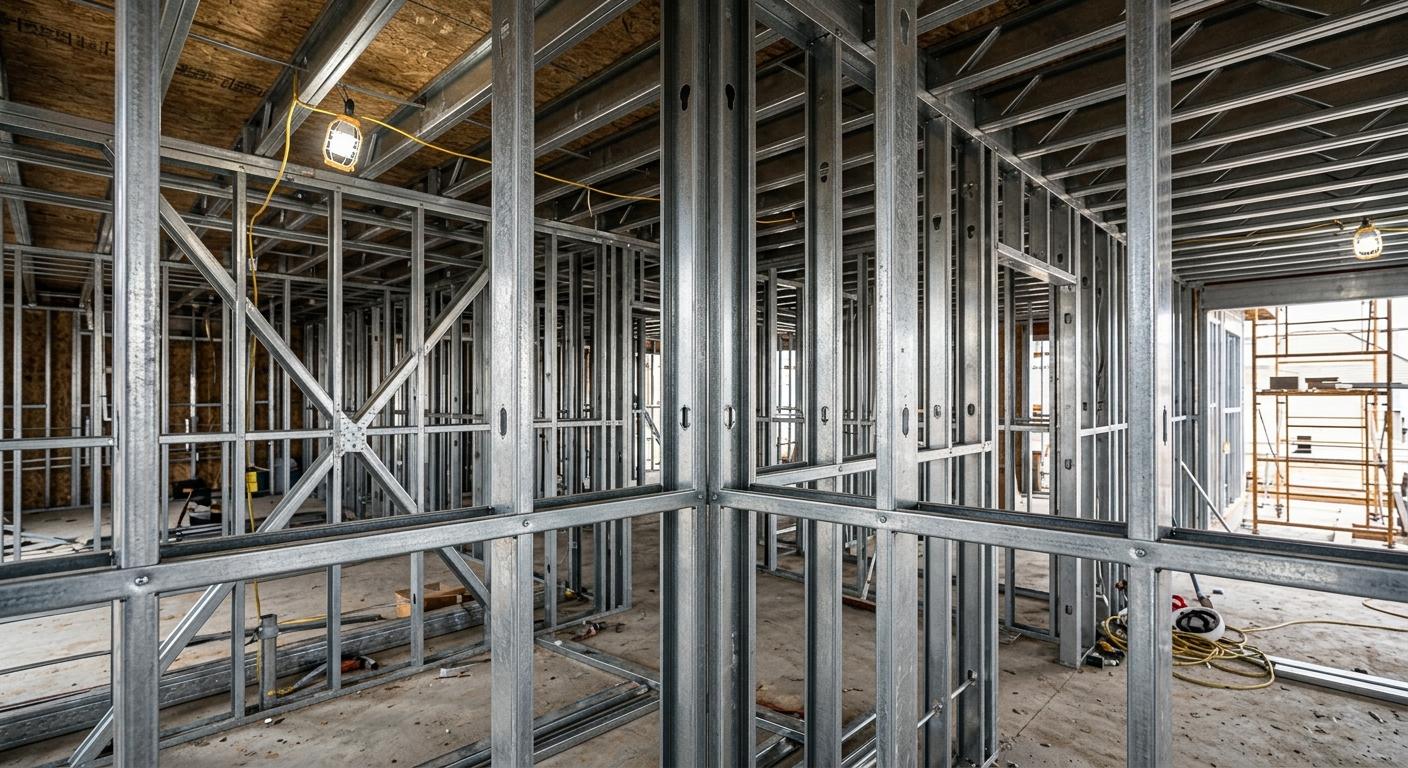
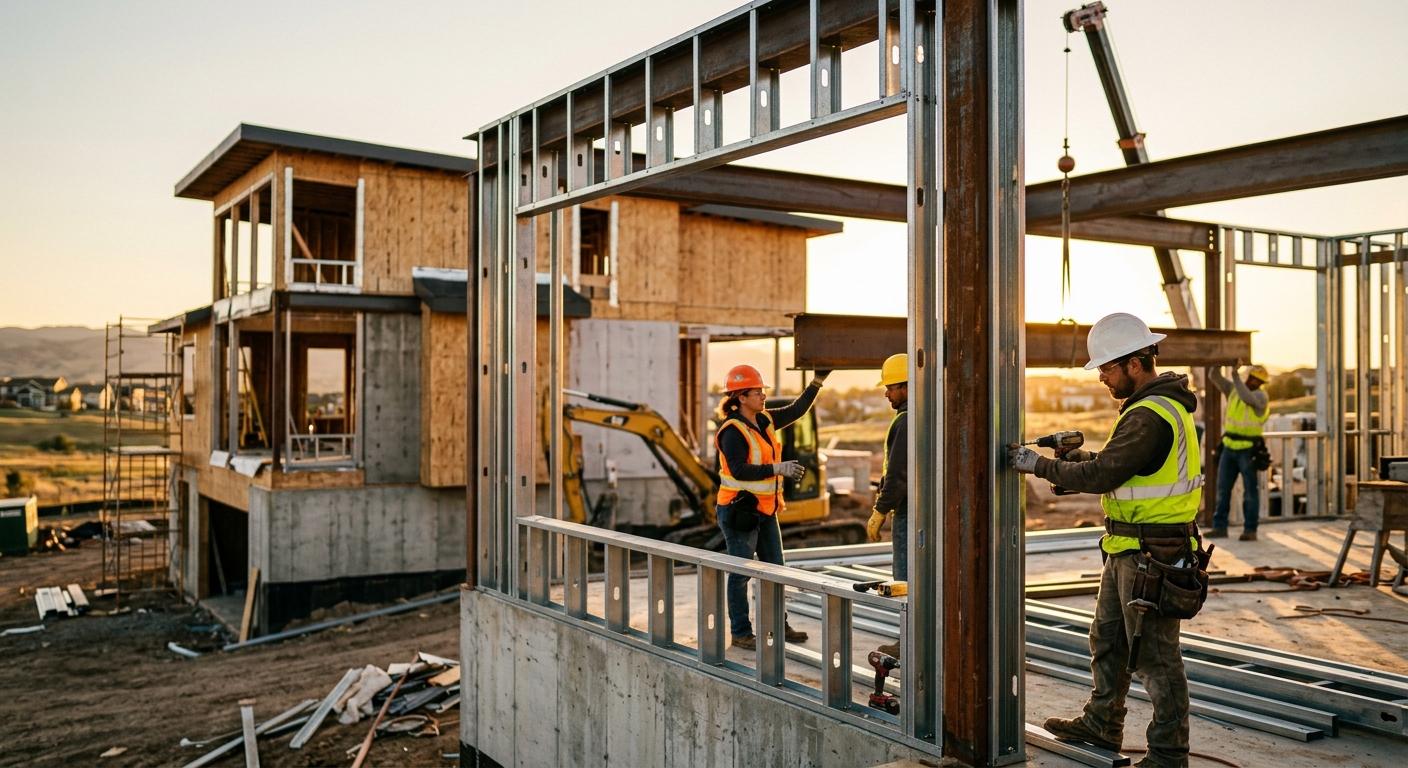
Steel framing in a residential build – heat treatment makes these components resistant to corrosion, pests, and fire
Steel framing starts in manufacturing plants that depend on heat treatment solutions to produce components that are both strong enough to carry a load and flexible enough not to crack under stress. Two processes do most of the work here: annealing and normalizing.
Annealing heats steel slowly and cools it even more slowly, releasing internal stresses that build up during rolling and forming into studs, beams, and joists. If those stresses stay in the metal, micro-cracks can develop over decades. Normalizing heats the steel to a higher temperature and then air-cools it, refining the grain structure so the material performs consistently throughout its cross-section.
The payoff for homeowners is real. The Steel Framing Industry Association reports that cold-formed steel framing assemblies can be fireproof for up to four hours under ASTM E119 testing. Steel also doesn’t rot, doesn’t attract termites, and doesn’t warp when humidity changes. According to HC Steel Structure (2025), properly maintained steel buildings routinely last 50 to 100 years, with some exceeding a century of service.
2. Pipes for plumbing and HVAC systems
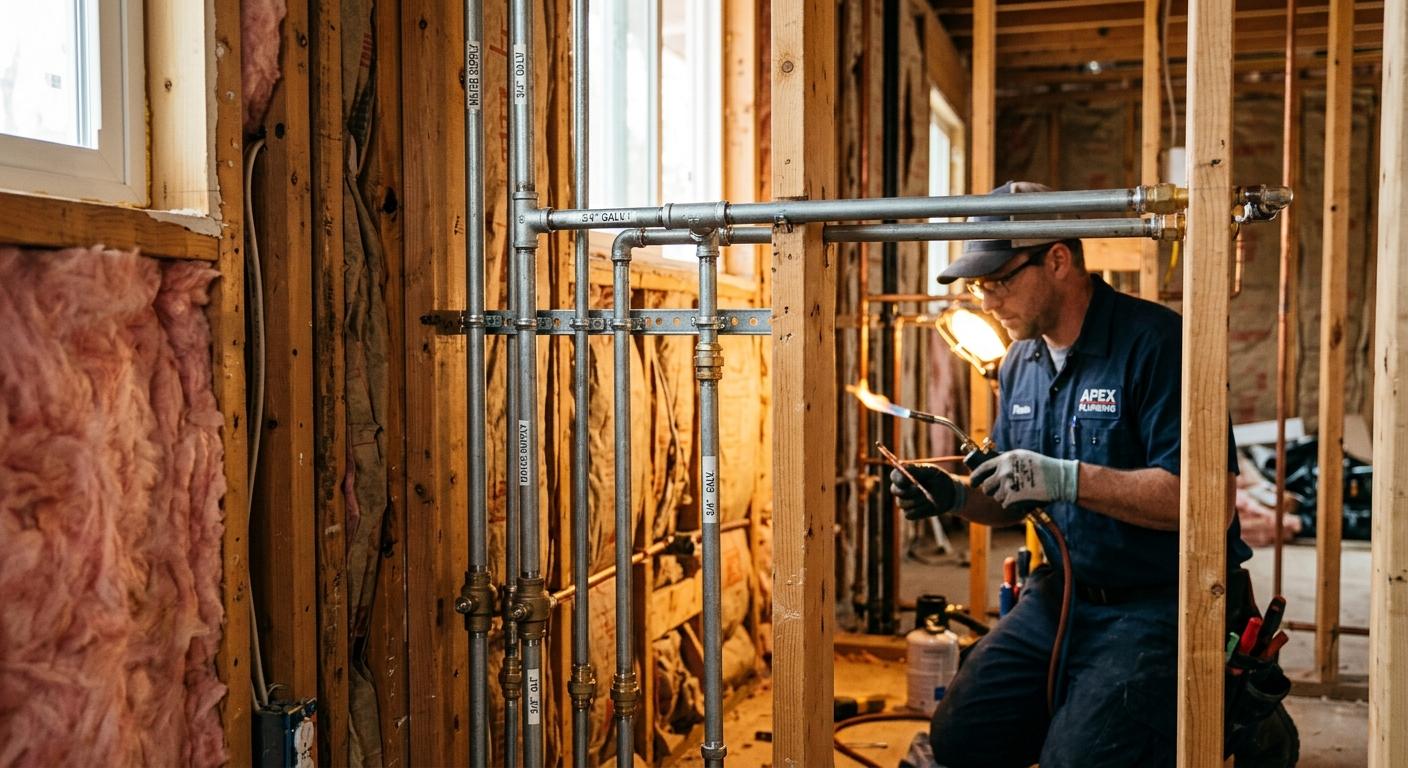
Heat-treated steel pipes resist corrosion and stress fractures, supporting reliable water and HVAC systems for decades
The steel pipe in your walls went through heat treatment at the mill before it was ever cut to length. Annealing makes steel pipe less brittle, which matters a lot during installation when pipes get bent, threaded, and fitted under physical stress. A pipe that’s too brittle when installed will develop small cracks that eventually lead to leaks.
Quenching and tempering are used on higher-pressure pipe grades – quenching hardens the steel fast, and tempering then draws back some of that hardness to restore toughness. The combination gives you a pipe that holds up under water pressure and thermal expansion. Every time your heating system cycles on and the pipes warm up and cool down, that repeated stress is working against whatever strength the manufacturing process put in.
Archive Market Research (2025) projects the global steel pipe heat treatment market at USD 59,560 million for 2025, growing at a 5.8% annual rate through 2033. That’s a measure of how standard this process has become in pipe production. For homeowners, the practical upside is fewer leaks, longer service life, and lower replacement costs – which connects directly to how well your household water systems hold up over time.
3. Heat-treated wood for decking, siding, and outdoor structures
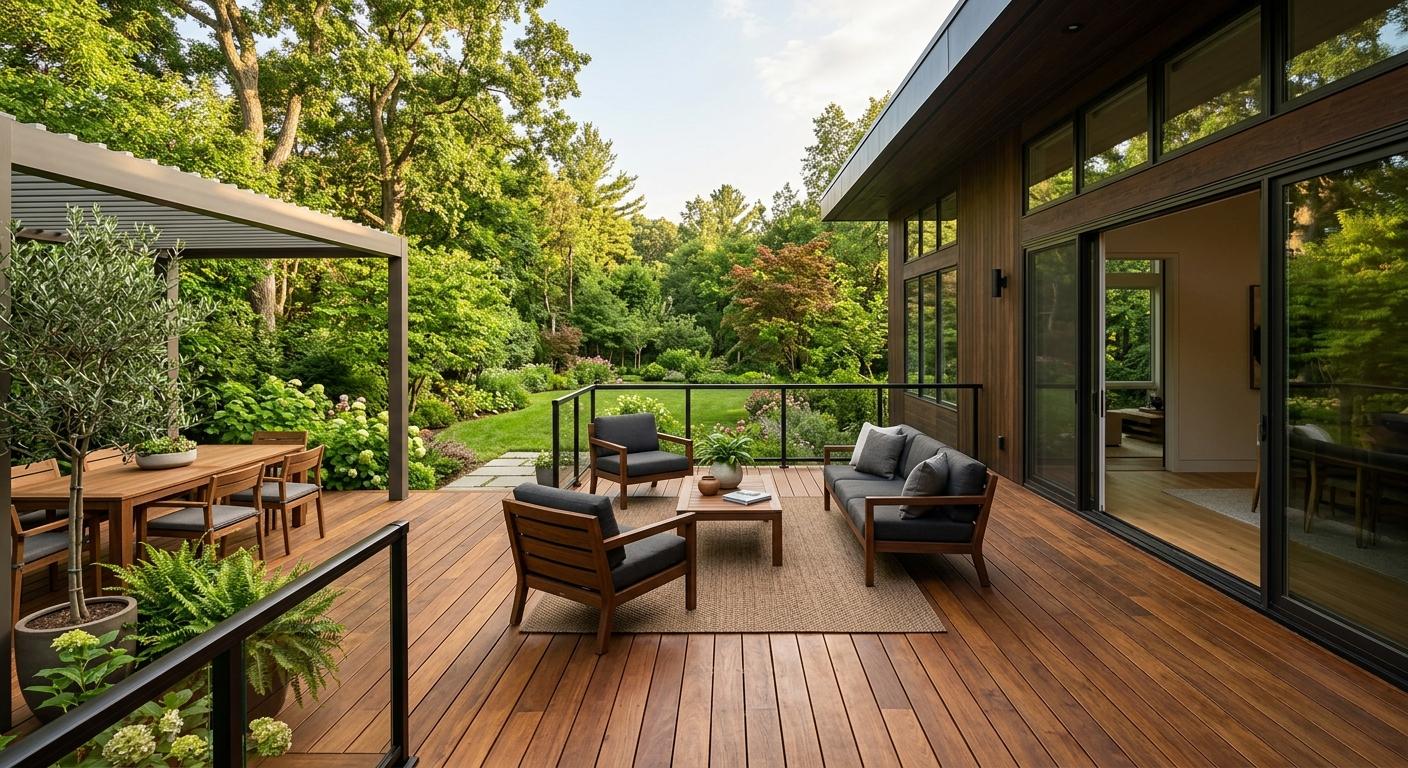
Heat-treated wood decking holds its shape and color longer than untreated alternatives, requiring less maintenance over time
Thermally modified wood – what the industry calls heat-treated wood – is made by putting lumber through temperatures of 400 to 450 degrees F in a controlled, steam-filled environment. That heat changes the wood’s cellular structure. The carbohydrates that wood-rotting fungi feed on break down. The wood becomes hydrophobic, meaning it absorbs less moisture.
The practical result: Westwood Millworks (2024) reports that heat-treated wood exhibits 50-70% less shrinkage and swelling than untreated wood. For a deck, that means fewer boards warping, cupping, or splitting across seasonal changes. For siding, it means less paint failure. The material also resists insects without the chemical preservatives found in pressure-treated lumber – a real consideration for families with kids or pets spending time on outdoor surfaces.
ReportPrime (2025) values the heat-treated wood market at $444 million for 2025, with an 8.9% annual growth rate through 2031. The market is growing because performance data is convincing builders and homeowners to pay the modest premium. If you’re weighing options for outdoor materials, checking out long-lasting floor solutions is a good place to see how durable materials compare over the full cost of ownership.
4. Fasteners, bolts, and connectors
Every structural connection in your home – joist hangers, hurricane ties, anchor bolts, post bases – relies on case-hardened steel fasteners. Case hardening is a heat treatment process that creates a hard outer layer on the fastener while leaving the core tough and ductile. That combination matters: a fastener that’s hard all the way through will snap under sudden load, while one with a tough core will flex slightly before failing.
In hurricane-prone or earthquake-prone areas, this is not a minor point. Dynamic forces during a storm or seismic event stress connections in ways that static loads never do. The fasteners holding your roof to your walls, or your wall panels to the foundation, are absorbing real force.
According to Grand View Research (2024), steel accounts for 79.9% of the global heat-treating market by material, reflecting how central heat treatment is to steel manufacturing at every scale, including small components. The bolts and connectors in your home have undergone the same class of industrial processes used in aerospace manufacturing. They just cost less to make.
5. Roofing metal and cladding
Metal roofing and steel cladding panels go through annealing to become workable. Without it, sheet metal cracks when it’s formed, bent, or stamped into roofing profiles. Annealing softens the material enough to be shaped, then subsequent processes return the required hardness.
Tempered steel roofing panels resist denting from hail and wind-driven debris better than softer alternatives. Normalized steel holds its shape through the thermal expansion and contraction that every roof goes through across seasons – expanding in summer heat, contracting in winter cold, day after day for decades. Metal that hasn’t been properly heat-treated develops fatigue in those stress cycles much faster.
The American Iron and Steel Institute (January 2025) notes that structural steel produced in North America contains 90% or more recycled content. Metal roofing’s durability and recyclability together make it one of the more sustainable long-term roofing choices. The initial cost is higher than that of asphalt shingles, but the service life – often 40 to 70 years – changes the math considerably.
6. Window and door hardware
This is the one most people don’t think about. The hinges, locks, strike plates, and reinforced door frames in a secure home are made from quenched and tempered steel. Quenching produces extreme hardness. Tempering draws that hardness back to a controlled level so the hardware doesn’t shatter on impact.
Hardened strike plates don’t bend when someone tries to kick in a door. Hardened hinges don’t strip their screw holes over the years of repeated opening and closing. The difference between hardware that fails after 10 years and hardware that lasts 40 often comes down to whether the steel was heat-treated to the right specification at the factory.
It’s one of those cases where what you can’t see matters more than what you can.
7. Concrete reinforcement (rebar)
Rebar sits inside every concrete foundation, every poured wall, and every structural slab. Its job is to give concrete the tensile strength it lacks on its own – concrete handles compression well but cracks easily under tension and bending forces. Rebar handles those loads instead.
For rebar to do that job, it needs to be ductile. Too brittle, and it cracks before the concrete does during seismic events or foundation settling. Annealing and normalizing during production set the ductility to code-required levels. Without that process, rebar that looked fine on delivery could fail exactly when it’s needed most.
Foundation problems are the most expensive repair in residential construction – easily reaching six figures depending on severity. The heat treatment decisions made in a steel mill years before your home was built have a direct line to whether your foundation holds. Understanding how drainage failures that crack concrete interact with rebar integrity helps complete the picture of what keeps a foundation solid.
What this means when you’re buying or renovating
You won’t write “heat-treated components” into a renovation spec. It doesn’t work that way. Heat treatment is embedded in product standards, ASTM certifications, and building codes – it’s verified at the manufacturing level, not at the job site.
What you can do is ask questions. For structural steel, look for ASTM A36 or A572 designations on spec sheets. For metal roofing, ask suppliers about material grade and treatment. For decking, look specifically for thermally modified wood rather than generic pressure-treated lumber, which uses chemical preservatives instead of thermal processes.
The broader context is worth knowing. Grand View Research (2024) valued the global heat-treating market at USD 110.68 billion in 2024 and projected it to reach USD 152.51 billion by 2033. This is a massive, mature industry – not a niche process. It sits beneath residential construction in ways most homeowners never see.
The homes that hold up for 80 years aren’t just built better on the surface. Their materials were made better, in industrial facilities, long before any builder touched them. Heat treatment is a big part of why.



