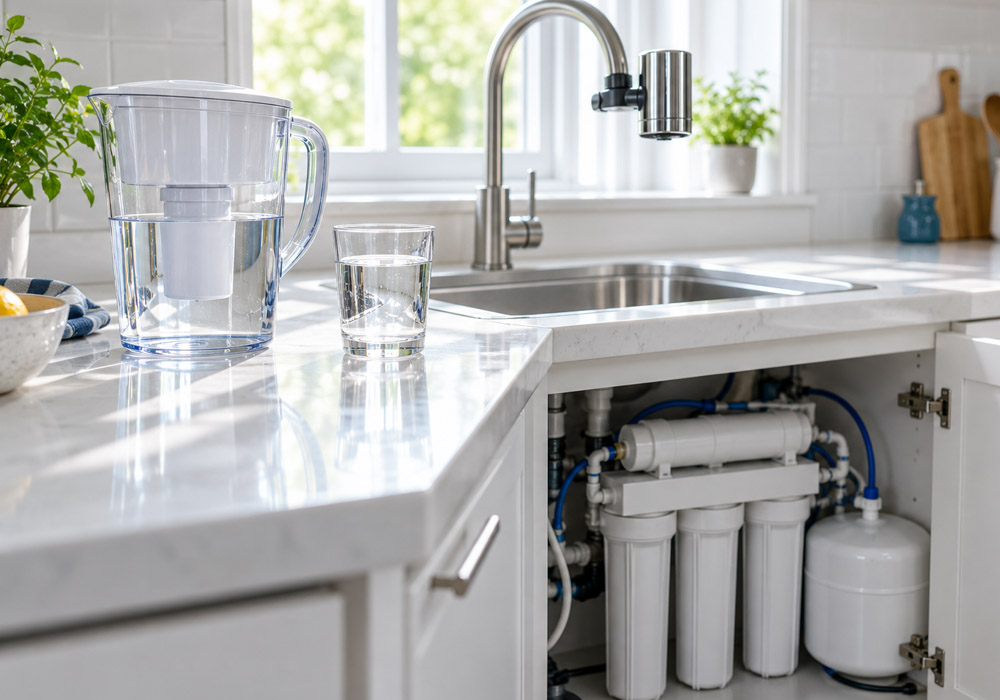
Households can choose from different water purification systems based on their needs and where they require the purified water. Some systems treat water throughout the home, while others serve specific points of use. Here is how to decide which system best fits your household needs and the type of contaminants you want to address:
Point-of-Use Systems
A point-of-use water purification system filters water at the location of use. They help households treat water for specific purposes such as cooking and drinking because they are installed under sinks or at faucets. These systems are practical for homes that want filtration at individual points where water exits the plumbing.
Point-of-use filtration systems operate without electricity and use household water pressure to move water through specialized filtration media. They are designed with durable filter technology that provides ongoing filtration and is intended to reduce the need for frequent filter replacement. The filtration materials are incorporated into a non-woven matrix designed to attract, capture, and remove unwanted contaminants from the water as it passes through the filter.
Point-of-use systems are designed to help households reduce a wide range of unwanted contaminants from their drinking water; this includes substances such as heavy metals, bacteria, pharmaceutical residues, and other impurities. The filtration process provides treated water while allowing naturally occurring minerals to remain in the water. This makes point-of-use filtration systems a practical option for areas where clean, filtered water is desired, including kitchen and bathroom applications. Their compact design and convenient installation allow filtration to take place directly where water is used.
Multi-Stage Systems
Some water purification systems use multiple filtration stages instead of relying on one type of filter. Each stage performs a different function, allowing the system to address different contaminants as water moves through the cartridge. Here are the different stages and the contaminants they remove from the water:
- Stage 1 uses advanced ceramic filters to remove bacteria such as E. coli, Salmonella, Giardia Lamblia Cysts, and Cryptosporidium
- Stage 2 uses special advanced resins and a catalytic carbon block to remove microplastics, forever chemicals, bad taste, heavy metals, Chlorine, pesticides, and bad odors
- Stage 3 extends the life of the unit and removes any remaining contaminants with a special compressed coconut carbon
Multi-stage systems are available in multiple configurations, depending on the household needs. The cartridges can include two, three, or four stages and vary in dimensions to best suit expected household requirements and point-of-use. This makes them a flexible option for modern homes looking for a reliable way to improve water safety and taste.
Whole-House Systems
A whole-house water purification system treats water entering the entire home. Instead of treating water at one faucet or fixture, it cleans the entire home’s system from one central point. This provides filtration for multiple household applications, including water used for bathing and other daily activities.
These systems effectively remove contaminants such as herbicides, pesticides, chlorine, and heavy metals. This reduces buildup in pipes, helping appliances like water heaters run more efficiently and for longer. It also prevents scaling, improving the taste and odor of the water.
Some whole-house systems use magnetic field technology to reverse hard-water conditions and make water feel softer. The water behaves like soft water without the use of salt and electricity, making it ideal for applications such as washing and cleaning. This helps protect plumbing infrastructure and prevents toxic metal leaching because the water maintains a balanced PH level.
Choose a Suitable Water Purification System
Different water purification systems serve various areas and household requirements. Homeowners can choose between point-of-use and multi-stage cartridges that filter water at individual fixtures and whole-house systems that clean water throughout the property. Start by reviewing the differences between these systems to select a suitable water filtration solution that meets your household needs.