A driveway gate can improve privacy, define the property entrance, and make daily vehicle access feel more controlled. The right choice is not simply the most decorative option. It should suit the driveway layout, the vehicles that use it, local rules, and the amount of maintenance the household can reasonably manage. Homeowners considering metal driveway gates should begin with the site itself, since material, size, and operating style all depend on practical conditions.
Careful planning also helps prevent expensive changes later. A gate that is too narrow, too heavy for its hardware, or positioned too close to the road can cause daily frustration and pose potential safety risks, explains Legacy Realty & Management, a trusted provider of property management Allen TX. Start by thinking about the full ownership experience, including access, weather exposure, drainage, operation, appearance, and future repairs.
Why Planning Matters Before Installation
A driveway gate affects more than curb appeal. It influences how residents, guests, deliveries, service vehicles, pedestrians, and emergency responders enter the property. Choosing a design before taking accurate measurements is one of the most common mistakes. Instead, identify the access needs first, then select a gate that supports them.
Driveways are connection points between private property and public roads, so sightlines and vehicle movement deserve attention. The Federal Highway Administration provides driveway access safety guidance that highlights the importance of access management, particularly on local and rural roads. A gate should allow drivers to enter and exit without unnecessarily stopping in traffic or blocking a shared path.
How the Driveway Layout Shapes Gate Design
Measure the Opening
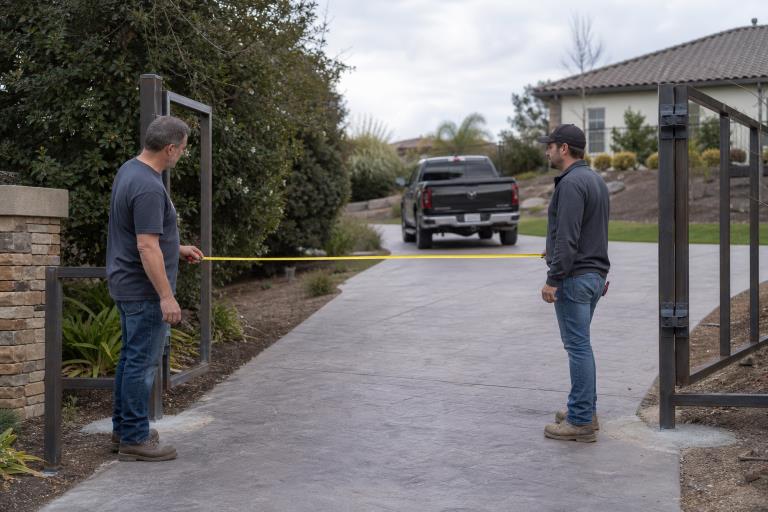
Measure the clear opening between proposed posts, not only the existing pavement width. Consider everyday cars, larger pickups, trailers, lawn equipment, delivery vehicles, and any future needs. A gate that works for one sedan may be inconvenient for a moving truck or utility trailer. Also, leave enough approach room so drivers can turn through the opening without clipping posts, landscaping, or fence sections.
Review Grade and Clearance
Driveway slope is a major factor. An inward-swinging gate may scrape a rising driveway surface, while an outward-swinging gate can create problems near a sidewalk or road. Check for overhead branches, retaining walls, utility boxes, planting beds, and structures that could interfere with movement. Where front-to-back space is limited, a sliding gate may be more practical.
Check Surface Conditions and Soil
Gravel, asphalt, and concrete each affect installation differently. Drainage paths, soft soil, frost movement, tree roots, and standing water can shift posts or interfere with rollers and tracks. Establish post locations and drainage needs before paving or completing major landscaping. Strong foundations and properly sized posts are essential for preventing sagging and uneven gaps.
Comparing Common Driveway Gate Materials
Metal
Metal offers strength, clean structure, and broad design flexibility. Steel and wrought iron can create a substantial traditional look, while aluminum is lighter and may reduce stress on hinges and operators. Stainless steel and bronze can offer distinct finishes, although cost and local climate should guide the decision. Coatings, paint systems, and powder-coated finishes can make a meaningful difference in corrosion resistance and routine care.
Wood, Composite, and Mixed Materials
Wood creates a warm, natural appearance but requires regular sealing, staining, and painting, as well as inspections for moisture damage. Composite can provide a wood-like look with greater resistance to rot and pests, although framing and structural support still matter. Mixed-material gates, such as metal framing with wood or composite infill, can balance privacy, strength, and visual contrast. Repeating colors from the home, roof, fencing, or landscape features helps the entrance feel intentional.
Swing Gates vs. Sliding Gates
When a Swing Gate Makes Sense
Swing gates create a classic entrance and can be configured as a single panel or a pair of panels meeting in the middle. They work well when the driveway is relatively level and has enough open space for the entire swing arc. A dual-swing layout can reduce the required arc for each panel, but both leaves need dependable hinges, stops, and latching hardware.
When a Sliding Gate Works Better
Sliding gates conserve front-to-back driveway space because they travel parallel to the fence line. They may be a better option for sloped approaches, tight entrances, or areas where wind makes a large swinging panel difficult to control. However, they require sufficient side clearance and a clear path that stays free of leaves, gravel buildup, snow, and other obstructions.
Manual or Automatic Operation
Manual gates are straightforward and may suit infrequent use, while automatic operators add convenience for long driveways and busy households. Consider power availability, weather conditions, daily traffic, and access methods such as remotes, keypads, intercoms, vehicle sensors, or mobile controls. Automation should be matched to the gate’s weight, length, wind exposure, and expected cycle count.
Important Safety Features
Every gate needs sturdy posts, secure hinges or rollers, reliable latches, and controlled closing. Automatic systems require additional safeguards, including photo eyes, pressure-sensitive edges, warning signs, obstruction detection, and a manual emergency release. Keep children, pets, and visitors away from moving panels, hinges, rollers, and pinch points.
Residential driveway gates should not be confused with child safety gates, which have different intended uses and requirements. The U.S. Consumer Product Safety Commission’s gate and enclosure safety information is useful for understanding hazards such as entrapment, falls, and sharp or poorly designed components. For powered driveway gates, use a qualified installer and follow the operator manufacturer’s installation and inspection instructions.
Matching the Gate to the Home
Style should support the architecture rather than compete with it. Traditional homes often suit curved tops, balanced picket spacing, or ornamental details. Modern properties may look best with simple horizontal lines, flat profiles, and restrained finishes. Rural properties may need wider, simpler openings that accommodate tractors, trailers, or larger work vehicles. In every setting, consider scale. A gate should look proportionate to the driveway, posts, fence line, and home.
Maintenance and Long-Term Care
Inspect the gate several times each year and after severe storms or heavy use. Check hinges, rollers, fasteners, latches, posts, wiring, safety devices, and finish condition. Remove leaves, dirt, ice, and standing water from moving areas. Watch for rust spots, wood checking, dragging, scraping, rattling, slow travel, and uneven spacing. Metal finishes may need touch-ups, wood needs protective coatings, and automated systems benefit from periodic professional service.
Permits, Setbacks, and Roadway Considerations
Before ordering materials, check city, county, state, neighborhood, and homeowners’ association requirements. Rules may address gate height, visibility, drainage, electrical work, road setbacks, and placement near sidewalks or shared drives. A gate should not swing into a roadway or pedestrian path. Confirm property lines and contact utility-location services before digging for posts, conduit, or foundations.
A Simple Pre-Installation Checklist
- Measure the opening, turning area, slope, and side clearance.
- List all vehicles, equipment, deliveries, and emergency access needs.
- Select the desired privacy level and architectural style.
- Compare material weight, upkeep, durability, and finish options.
- Choose swing or sliding operation based on available space.
- Plan power, drainage, lighting, controls, and safety devices.
- Verify permits, setbacks, utility locations, and association rules.
- Request a detailed site assessment before finalizing the design.
Final Planning Tips
A successful driveway gate project starts with accurate measurements and realistic expectations. Prioritize safe access, sound structural support, appropriate operation, and ongoing maintenance before focusing on decorative details. When the design fits the property and the gate is installed with long-term use in mind, it can become a functional, attractive entrance for years to come.